The Science of Condensation: Why Warrington Terraced Homes Suffer and How to Fix It
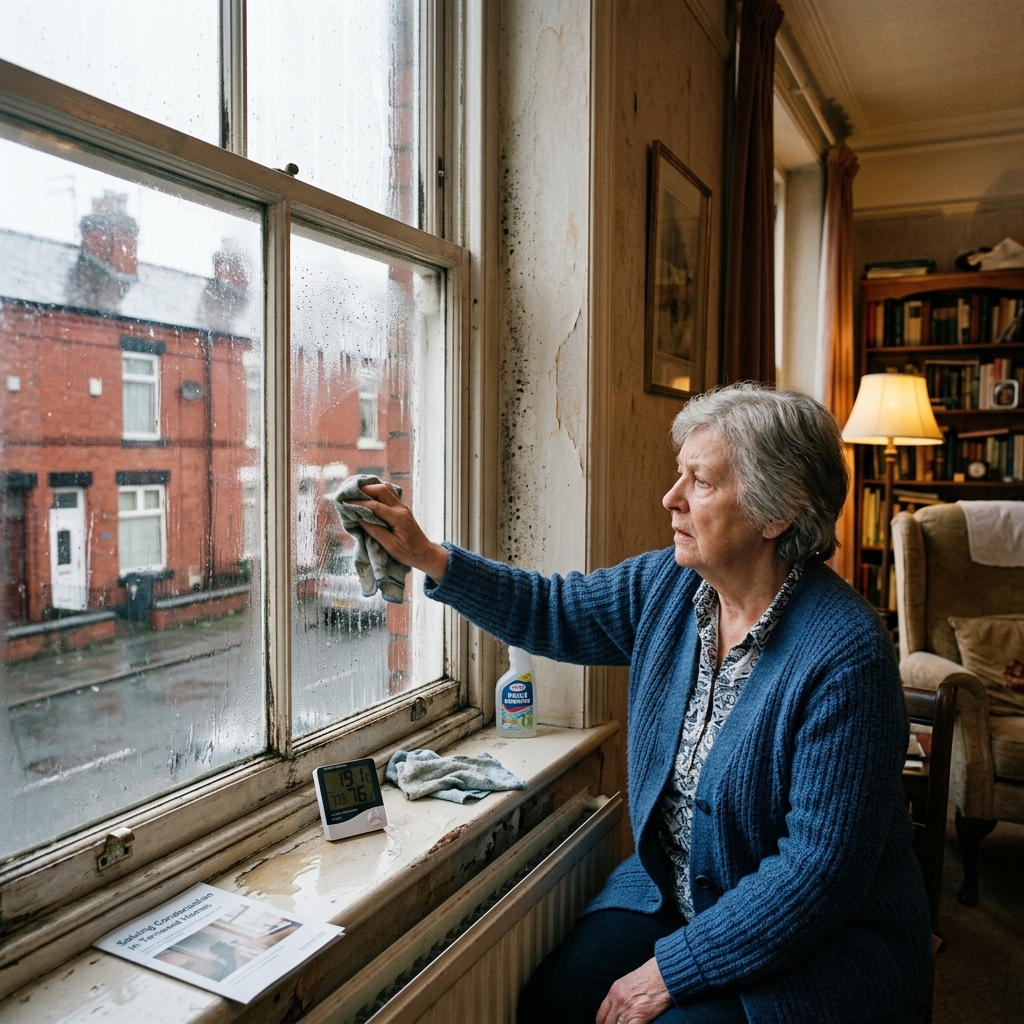
Waking up to the sound of rain lashing against the windowpane is a staple of life in the Northwest, but finding that rain inside on your windowsill is a different matter entirely. For many living in the Victorian terraces of Latchford or the sturdy brick rows of Orford, the morning ritual involves reaching for an old towel to mop up puddles before the kettle has even boiled. It isn’t a structural leak, and the roof tiles are perfectly intact; it is the silent, weeping accumulation of moisture known as condensation, and it plagues our local housing stock with relentless persistence.
While often dismissed as a minor nuisance, persistent condensation is a symptom of a home fighting a losing battle against thermodynamics. In Warrington, where a significant portion of the housing market consists of pre-1950s solid-wall properties, this battle is particularly fierce. The combination of our damp Cheshire climate, modern lifestyle habits, and historic building materials creates a perfect storm for moisture accumulation.
To solve this, we cannot simply "turn up the heat" and hope for the best. We must understand the physics at play. This guide serves as a comprehensive deep dive into the science of condensation, specifically tailored to the architectural quirks of Warrington’s terraced streets, offering actionable solutions ranging from behavioral changes to professional interventions.
Part 1: The Physics of the Problem
To defeat the enemy, one must understand it. Condensation is not water entering your home from the outside; it is water that is already inside, changing its state. It is a lesson in atmospheric physics occurring in your living room.
1. Relative Humidity and Carrying Capacity
At its core, condensation is about the relationship between air temperature and water vapor. Air acts like a sponge. Warm air is a large, expanded sponge capable of holding vast amounts of moisture. Cold air is a squeezed sponge; it can hold very little.
When we talk about "Relative Humidity" (RH), we are describing how full the sponge is at a specific temperature. If the air in your lounge is at 50% RH, it is holding half the water it is capable of holding at that current temperature. If you heat that air up, the sponge expands, and the RH drops (even though the amount of water hasn't changed). If you cool that air down, the sponge contracts, and the RH rises.
2. The Dew Point
This is the critical threshold. As air cools, its capacity to hold water diminishes. Eventually, it reaches 100% saturation. This temperature is called the "Dew Point." If the air cools even a fraction of a degree below this point, it can no longer hold the moisture as a gas. It must dump the excess load, turning water vapor back into liquid water.
3. Thermal Bridging
In a laboratory, air cools uniformly. In a Warrington terrace, air cools locally. This occurs where warm, moist internal air comes into contact with a cold surface. These cold spots are known as "thermal bridges." In older homes, these are typically single-glazed windows, uninsulated lintels, or external corners of a room where airflow is stagnant.
When your warm, moisture-laden indoor air hits a cold North-facing wall in Padgate, the air temperature at that microscopic boundary layer drops instantly. It hits the dew point, and water droplets form on the paintwork.
Part 2: The Warrington Context – Why Here? Why Now?
If condensation is just physics, why does it seem to disproportionately affect the terraced streets of Warrington compared to the new-build estates in Appleton? The answer lies in the architectural DNA of the town.
The Solid Wall Legacy
A vast number of properties in Warrington, particularly in areas like Bewsey, Latchford, and the town centre, were constructed before 1930. These homes were built with solid brick walls—usually 9 inches thick—rather than cavity walls.
- High Thermal Transmittance: Solid brick is a poor insulator. It conducts heat rapidly from the inside to the outside. This means the internal surface of your wall is often very close to the external temperature. During a Cheshire winter, your internal walls become giant cold surfaces, effectively designed to condense moisture.
- The "Breathing" Myth: Ideally, these old walls were designed to be breathable, allowing moisture to pass through the brickwork via lime mortar. However, decades of renovations have seen lime replaced with cement pointing and breathable paints replaced with plasticized vinyls. We have essentially wrapped our buildings in cling film, trapping moisture inside.
The Chimney Factor
Original Victorian terraces were drafty by design. They had sash windows that rattled and open fireplaces in almost every room. This constant draw of air up the chimney stack provided immense passive ventilation (changing the air in the room several times an hour).
Modern renovations have sealed up these chimneys, installed double glazing, and draft-proofed doors. While this makes the house warmer, it has killed the natural ventilation. We have created hermetically sealed boxes with solid, cold walls—the ultimate recipe for condensation.
Part 3: The Source of the Moisture
Where is all this water coming from? You aren't leaving the taps running, yet the average family of four in Warrington produces approximately 14 liters of water vapor per day. That is the equivalent of dumping a large bucket of water onto your carpet every 24 hours.
Daily Contributors
- Breathing and Sleeping: Two adults sleeping in a master bedroom for eight hours release roughly 1.5 liters of moisture just by exhaling.
- Cooking: Boiling pasta, steaming vegetables, and kettles all release steam. If you don't use lids on pans, you are humidifying the kitchen.
- Hygiene: A ten-minute hot shower creates a massive spike in humidity. If the bathroom door is opened immediately afterward, that moisture migrates to the coldest room in the house (usually the bedroom) and condenses there.
- Laundry: This is the silent killer of dry homes. Drying a load of washing on a radiator releases 2 liters of water straight into the air. In a sealed terrace, that water has nowhere to go.
Part 4: Consequences of Neglect
Ignoring the "crying windows" is dangerous. The progression from condensation to damage is rapid.
Black Mould (Stachybotrys chartarum)
Mould spores are everywhere in the air, but they need liquid water to germinate. Condensation provides this. Once established, black mould feeds on the cellulose in wallpaper, the organic matter in paint, and dust.
Health Implications
For the elderly, young children, or those with asthma, mould spores are a serious respiratory irritant. Living in a damp home has been clinically linked to the development of asthma and the exacerbation of existing lung conditions. In the wake of recent housing legislation changes, the focus on damp and mould in rental properties has never been higher, but homeowners are equally at risk.
Structural Decay
Water is the universal solvent. Over time, persistent condensation can rot skirting boards, degrade plaster, and even cause timber floor joists to rot if the moisture penetrates the sub-floor void.
Part 5: Immediate Behavioral Fixes
Before spending money on structural alterations, you must stop feeding the problem. Here are immediate changes you can make today.
1. The "Cross-Draft" Technique
Opening a window slightly doesn't always work if there is no pressure differential. To purge moisture effectively, open windows on opposite sides of the house for 10 minutes every morning. This creates a cross-draft that flushes out stale, wet air and replaces it with fresh (albeit cold) air. Fresh air is drier and easier to heat.
2. Heating Consistency
Intermittent heating (blasting the heating for an hour, then letting the house go cold) exacerbates condensation. It allows the fabric of the building to cool down completely. When the heating comes back on, the warm air hits the cold walls, and condensation spikes. Maintaining a lower, constant background temperature keeps the walls warmer, preventing the dew point from being reached.
If your radiators have cold spots or your system is sluggish, the walls will never reach a sufficient temperature to ward off damp. It is vital to ensure your system is operating at peak efficiency. You should have your system balanced and serviced by professional heating engineers to ensure every kilowatt of energy is actually heating the fabric of your home.
3. Kitchen and Bathroom Discipline
- Close the Door: When cooking or showering, keep the door closed.
- Lids on Pans: Always.
- Extractor Fans: Ensure they are running. If you hold a piece of toilet paper up to your extractor fan and it doesn't stick, the fan is clogged or the motor is dead.
Part 6: Structural and Professional Solutions
For many Warrington terraces, lifestyle changes alone aren't enough because the thermal performance of the building is simply too poor. Here is where we move into professional territory.
1. Ventilation Upgrades
The most effective way to combat condensation in sealed homes is Positive Input Ventilation (PIV). A PIV unit is usually installed in the loft. It draws fresh air from outside, filters it, and gently pushes it into the landing area.
This raises the air pressure inside the house slightly. Because air moves from high pressure to low pressure, the damp, stale air is forced out through the natural leakage points of the house (trickle vents, under doors, etc.). It creates a constant air change without opening windows.
Similarly, standard bathroom fans often fail because they are not powerful enough to overcome the back-draft of wind against the external wall. Humidistat-controlled fans that track moisture levels are far superior. To install PIV units or upgrade extraction systems safely, you must consult qualified electricians who can ensure the wiring meets current Part P building regulations.
2. Insulation Strategies for Solid Walls
If the wall is cold, it will attract water. Insulating solid walls is difficult but possible.
- External Wall Insulation (EWI): This involves wrapping the outside of the house in insulation and rendering over it. It is highly effective but changes the appearance of the house and can be expensive.
- Internal Wall Insulation (IWI): This involves building a stud wall or applying insulated plasterboard inside. It is cheaper but you lose floor space. Crucially, this must be done correctly with vapor control layers, or you risk trapping moisture behind the insulation, rotting the brickwork.
3. Surface Treatments and Decoration
Many homeowners in Warrington make the mistake of painting over mould with standard emulsion, or using "washable" silk paints in bathrooms which trap moisture in the plaster.
Once you have addressed the ventilation, you need to repair the aesthetic damage. However, you cannot simply paint over live mould spores; they will grow back through the new paint within weeks. The surface needs to be treated with fungicidal wash. Furthermore, the choice of paint matters. Specialist anti-condensation paints contain microscopic glass beads that hold heat, keeping the wall surface slightly warmer.
For the exterior, if your brickwork is soaking up rain (penetrating damp) which then contributes to internal cold spots, a breathable masonry cream might be required. For high-quality application of anti-mould coatings or exterior masonry protection, it is best to hire experienced decorators who understand the specific needs of older substrates.
Part 7: The Dehumidifier Debate
Is a dehumidifier a solution? Yes and no.
A compressor dehumidifier actively removes water from the air. In the short term, during a particularly damp Warrington winter, it is an excellent tool to dry out the fabric of the building. It also releases a small amount of heat, which helps.
However, a dehumidifier is a band-aid, not a cure. It treats the symptom (high humidity) but not the cause (lack of ventilation or cold surfaces). Running a dehumidifier 24/7 is also expensive in electricity. It is a great diagnostic tool and emergency fix, but PIV systems or better insulation are superior long-term investments.
Part 8: A Step-by-Step Action Plan for Warrington Residents
If you are reading this while looking at a damp patch on your wall, here is your roadmap:
- Diagnose: Buy a cheap hygrometer (humidity meter) online. If your home is consistently above 60% RH, you have a problem.
- Purge: Adopt the cross-ventilation habit immediately.
- Check Heat: Bleed your radiators. If the heating system is old, get it checked by a professional. A warm radiator on a cold wall is your first line of defense.
- Clear Airways: clean your extractor fans and ensure trickle vents on windows are open.
- Professional Assessment: If mould persists, don't guess.
- Call an electrician to discuss PIV units or high-power extraction.
- Call a painter to treat the walls properly once the moisture source is managed.
- Call a heating engineer if your boiler isn't maintaining a steady ambient temperature.
Conclusion
Condensation in Warrington’s terraced housing is not a curse; it is a predictable result of physics meeting history. We love our period properties for their character, their high ceilings, and their sense of community, but they require a different "operating manual" than a modern build.
By understanding the relationship between heating, ventilation, and insulation, you can turn a damp, musty house back into a warm, healthy home. It requires a combination of changing daily habits and investing in the right infrastructure. Don't let the damp win. Take control of your environment, consult the right local tradespeople, and reclaim your home from the wet Cheshire winter.
For all your renovation and maintenance needs, remember to use verified local professionals who understand the specific challenges of our local area.
Enjoyed this article?
Need a Verified Tradesperson in Warrington?
Browse verified local professionals across Warrington & Cheshire. Compare reviews, check qualifications, and get free quotes.