The Essential Guide to Gutter Maintenance for Preventing Damp in Winter
2026 Warrington Roof Repair, Flat Roofs & Guttering Costs (WA1–WA13)
Accreditation standard: NFRC & CompetentRoofer
| Common Warrington Job | 2026 Price Range |
|---|---|
| Missing Slate / Tile Storm Repair | £120 – £260 |
| EPDM / GRP Flat Roof Replacement (Garage) | £1,200 – £2,200 |
| uPVC Fascias, Soffits & Guttering (Semi-Detached) | £1,600 – £2,600 |
| Full Re-Roof (3-Bed Semi-Detached incl. Scaffolding) | £6,500 – £9,800 |
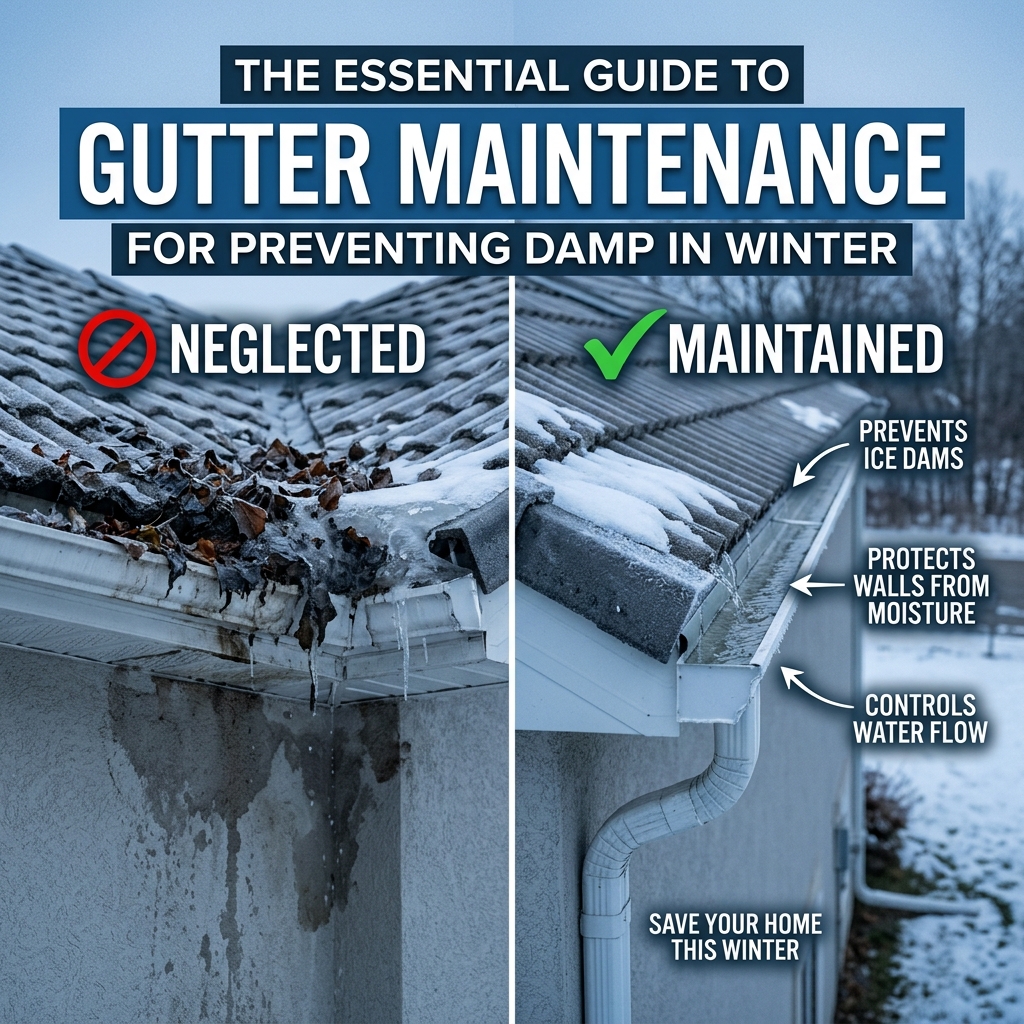
Did you know that a standard residential roof sheds approximately 1,000 gallons of water for every inch of rainfall? That immense volume relies entirely on a few narrow inches of channeling to protect your home's foundation and walls from catastrophic erosion. Neglecting this crucial system is the single most common cause of penetrating damp during the harsh British winter, leading to thousands of pounds in avoidable repair costs.
While often overlooked, your guttering system is the first line of defense against the elements. For homeowners in Warrington and the wider Cheshire area, where rainfall is frequent and winter freezes can be severe, understanding the mechanics of gutter maintenance is not just a chore—it is a necessity for asset protection. This comprehensive guide will take a deep dive into the relationship between blocked gutters and damp, provide a detailed step-by-step maintenance plan, and help you decide when professional intervention is required.
The Mechanics of Damp: Why Gutters Matter
To understand why gutter maintenance is critical, one must first understand the physics of water ingress. Your home is designed as a sealed envelope. The roof intercepts precipitation, and the gutters and downpipes are the transport mechanism designed to move that water away from the porous materials of your walls and foundation.
When gutters fail, water does not simply vanish. It seeks the path of least resistance. This usually results in one of three scenarios:
- The Overflow Effect: Water spills over the sides of the gutter, cascading down the exterior walls. This saturates the brickwork. While bricks are durable, they are porous. Constant saturation leads to "penetrating damp," where moisture soaks through the masonry and into the internal plaster.
- The Splashback Effect: Water hitting the ground from a height causes soil and water to splash up against the base of the wall, often bridging the Damp Proof Course (DPC). This can mimic rising damp but is actually caused by poor drainage from above.
- Foundation Erosion: Pools of water gathering at the base of your home can soften the ground beneath the footings, leading to settlement cracks and structural instability.
The Winter Multiplier
In winter, these problems are exacerbated by the freeze-thaw cycle. Water that has penetrated a brick or a mortar joint expands by approximately 9% when it freezes. This expansion causes microscopic cracks to widen, known as spalling. Over a single winter, a minor leak caused by a blocked gutter can result in the face of your brickwork crumbling away, requiring expensive remedial work.
Identifying the Warning Signs
Waiting for water to drip through your bedroom ceiling is a reactive strategy that often comes too late. A proactive homeowner looks for early warning signs. Perform a visual inspection of your property's exterior at least twice a year, specifically looking for the following:
- Vegetation Growth: If you see grass, weeds, or moss peeking over the edge of the gutter, the blockage is already severe. This root growth can damage the gutter joints and seals.
- Sagging Gutters: The weight of wet debris and standing water is immense. If the gutter line looks uneven or bows in the middle, the brackets are failing under the load.
- Staining on Brickwork: Look for white, salty deposits (efflorescence) or dark patches on the brickwork directly beneath the gutter line. This indicates long-term water cascading.
- Splash Marks: If the ground directly below the eaves shows signs of a trench or heavy splash marks, your gutters are likely overflowing during heavy rain.
- Insect Activity: Stagnant water in clogged gutters is a breeding ground for mosquitoes and other insects.
The Comprehensive DIY Cleaning Guide
If you are comfortable working at heights and have the necessary equipment, cleaning gutters is a manageable weekend task. However, safety must be the paramount concern.
Essential Tools
- Sturdy Extension Ladder: Ideally with a standoff bar (stabilizer) to prevent resting the ladder directly on the plastic guttering, which can crack it.
- Gutter Scoop: A plastic scoop or a cut-down milk bottle prevents scratching the gutter surface.
- Bucket and S-Hook: To collect debris rather than dropping it on the patio.
- Heavy-Duty Gloves: To protect against sharp objects, thorns, and bacteria found in decomposing sludge.
- Garden Hose: With a spray nozzle for the final flush.
- Plumber’s Snake (Optional): For clearing stubborn downpipe blockages.
Step-by-Step Procedure
Step 1: Ladder Safety and Setup Ensure the ground is level and firm. If the ground is soft, place a board under the ladder feet. Adhere to the 4-to-1 rule: for every 4 feet up, the ladder base should be 1 foot out from the wall. Never overreach; keep your belt buckle within the stiles (side rails) of the ladder.
Step 2: Roof Clearing Before touching the gutters, rake or brush any loose moss and leaves off the roof slope. If you clean the gutters first, the next rain will simply wash this roof debris down and clog them again immediately.
Step 3: Debris Removal Start near the downpipe and work away from it. Remove large debris by hand or with the scoop. Place the muck into your bucket. Do not push debris into the downpipe, as this will create a complex clog inside the vertical pipe.
Step 4: The Downpipe Check Once the horizontal run is clear, check the downpipe. If it is blocked, water will not drain. You can tap the pipe to hear if it sounds solid (blocked) or hollow (clear). If blocked, use a plumber's snake or a high-pressure hose nozzle to dislodge the obstruction.
Step 5: The Flush and Test Use your garden hose to flush the gutters. Watch the flow. It should move swiftly toward the downpipe without pooling. This is also the moment to check for leaks at the joints.
Repairing Common Gutter Issues
Cleaning often reveals damage that requires repair. The nature of the repair depends on your gutter material, which in Warrington is typically uPVC, though older properties may still have cast iron.
Leaking Joints (uPVC)
Most modern gutters use a rubber gasket system. Over time, dirt gets between the rubber and the plastic, or the rubber perishes.
- Unclip the connecting bracket.
- Clean the rubber seal and the plastic surface thoroughly.
- If the rubber feels hard or brittle, replace the seal.
- Reassemble the joint, ensuring the gutter sits within the "expansion lines" marked inside the fitting.
Fixing Sagging Gutters
Sagging is caused by incorrect bracket spacing or loose screws. Plastic gutters should have support brackets every 800mm (approx. 31 inches). If yours are spaced wider, the gutter will sag when full.
- Remove the gutter length.
- Unscrew the loose brackets.
- Fill the old holes with a weather-resistant filler.
- Re-fix the brackets, potentially adding intermediate ones for extra support.
- Use a string line to ensure a slight fall toward the downpipe (typically 1:350 ratio).
If the fascia board behind the gutter is rotten, the screws will not hold. In this scenario, you are looking at a more significant structural repair involving the replacement of fascias and soffits. For this level of work, it is highly recommended to consult professional Roofing Services to ensure the roofline is sealed correctly against pests and weather.
The Hidden Dangers: Electrical and Structural Risks
While damp walls are unsightly and unhealthy, water ingress poses immediate safety risks that many homeowners fail to consider until it is too late.
Electrical Hazards
Water is a conductor. When penetrating damp soaks through a wall, it often comes into contact with internal wiring, sockets, and junction boxes buried within the plaster. This can lead to:
- Short circuits and tripping fuses.
- Corrosion of internal wiring.
- Live walls (in extreme cases).
- Fire hazards due to arcing.
If you notice damp patches near light switches or sockets, or if your RCD (Residual Current Device) trips frequently during heavy rain, do not attempt to fix this yourself. You require qualified Electricians to conduct a safety inspection and certify the integrity of your home's wiring.
Structural Compromise
Long-term gutter failure can undermine the very footprint of your home. Water pooling at the base of the house can wash away the fines (soil particles) supporting the foundation. This leads to subsidence.
Furthermore, if you are planning home improvements, such as a conservatory or a kitchen extension, existing drainage issues must be resolved first. Adding new roof area increases the water load. When planning these projects, local Builders & Extensions specialists will calculate the rainfall flow rate to ensure your new and existing drainage systems can handle the volume, preventing future damp issues in your new investment.
Winter Specifics: Ice Dams and Frozen Pipes
In the UK, while we don't get Canadian-style winters, we do get "Ice Dams." This occurs when heat escapes from your roof (due to poor insulation), melting the snow on the tiles. This meltwater runs down to the cold gutter, where it refreezes.
This wall of ice blocks subsequent meltwater, causing it to back up under the roof tiles and leak into the attic. This can saturate insulation (rendering it useless) and rot roof timbers.
Prevention Tips:
- Clean Gutters Before Winter: Debris traps water, which freezes faster than flowing water. A clean gutter allows water to drain away before it freezes.
- Insulate the Attic: Keeping the roof surface cold prevents the melt-freeze cycle.
- Ventilation: Ensure soffit vents are not blocked by insulation, keeping the roof deck cool.
Cast Iron vs. uPVC: Material-Specific Care
Many heritage homes in Cheshire still utilize cast iron gutters. These require a different approach to the standard uPVC.
Cast Iron Care:
- Rust Prevention: Check for rust bubbles. These must be wire-brushed down and treated with a metal primer and bituminous paint.
- Joint Sealing: Cast iron joints are bolted and sealed with mastic. If they leak, the old mastic must be chiseled out and replaced.
- Weight: Cast iron is heavy. Ensure the spikes or brackets driving into the masonry are secure. A falling cast iron gutter can be lethal.
uPVC Care:
- UV Damage: Over time, white plastic can become brittle due to sun exposure. If the plastic creaks loudly when pressed or shows hairline cracks, the system has reached the end of its lifespan.
- Thermal Expansion: Plastic expands and contracts significantly. Ensure the gutting is not fitted too tightly between walls, or it will buckle in summer and pull apart in winter.
Gutter Guards: Are They Worth It?
Homeowners often ask if installing gutter guards (hedgehogs, mesh, or covers) eliminates the need for maintenance. The honest answer is: No, but they reduce it.
- Hedgehog Brushes: These bottle-brush style inserts sit in the gutter. They are cheap and easy to install. However, pine needles and seeds can get trapped in the bristles, eventually turning into a mossy log that is difficult to clean.
- Mesh Guards: These clip over the top. They are effective against leaves but can still allow silt and roof grit to enter, which builds up as sludge on the bottom. You will still need to flush the gutters, though perhaps less frequently.
- The Verdict: Guards are excellent if you live near deciduous trees, but they do not make the system "maintenance-free." You still need to inspect them annually.
When to Call the Professionals
While cleaning is a DIY task for many, there are specific scenarios where calling in a professional is the smarter, safer choice:
- Access Issues: If your home is three stories high, or built on a slope, standard ladders are insufficient and dangerous. Professionals use cherry pickers, scaffolding, or SkyVac systems (cameras and vacuums on long poles).
- Asbestos Risks: Some older properties (pre-1990s) may have asbestos cement gutters. These should never be sanded, drilled, or scrubbed abrasively by a homeowner. Specialist removal is required.
- ** extensive Damage:** If the fascia boards are rotting, or the downpipes are disconnected from the underground drainage system, this moves beyond maintenance into construction work.
For complex repairs involving the roofline, relying on verified Roofing Services ensures that the repair is watertight and guaranteed. Similarly, if the water damage has affected the structural brickwork or internal plastering significantly, consulting Builders & Extensions experts can help you plan the restoration of your home's fabric.
Conclusion: A Small Task with Massive Impact
Gutter maintenance is rarely the highlight of a homeowner's weekend. It is dirty, wet, and involves working at height. However, viewed through the lens of asset protection, it is perhaps the most high-value hour of work you can perform on your property.
By keeping that simple channel of plastic or iron clear, you are preventing damp, protecting your foundation, saving your plaster, and ensuring your electrical safety. As winter approaches in Warrington, take the time to look up. If you see moss, weeds, or drips, act now. Clear the blockage, repair the leak, or call in the tradesmen. The cost of a clean gutter is a fraction of the cost of a dried-out wall.
Protect your home this winter—keep the water flowing.
Enjoyed this article?
Need a Verified Tradesperson in Warrington?
Browse verified local professionals across Warrington & Cheshire. Compare reviews, check qualifications, and get free quotes.