Signs Your Consumer Unit Needs an Urgent Upgrade: An Electrician's Perspective
2026 Warrington Electrician, Rewire & EV Charger Costs (WA1–WA13)
Accreditation standard: NICEIC / NAPIT Part P Registered
| Common Warrington Job | 2026 Price Range |
|---|---|
| Consumer Unit (Fuse Box) Upgrade with SPD | £480 – £750 |
| EICR Landlord / Homebuyer Safety Certificate | £140 – £220 |
| 7kW Home EV Charger Installation | £850 – £1,250 |
| Full 3-Bed House Rewire | £3,800 – £5,500 |
How confident are you that the plastic box hidden under your stairs can actually stop a lethal electrical fire before it destroys your home? Most homeowners assume that simply because the lights turn on and the kettle boils, their electrical infrastructure is sound, but this silence often masks a critical failure point. For those living in older Warrington properties, relying on outdated technology isn't just a minor inconvenience; it is a gamble with safety that you simply shouldn't take.
As electricians, we view the consumer unit—often colloquially referred to as the "fuse box"—as the beating heart of a property's safety system. It is the primary gateway for electricity entering your home and the only line of defence against electrocution and electrical fires. Yet, it remains one of the most neglected components in property maintenance. While homeowners happily invest in aesthetic upgrades, the vital protective gear often languishes untouched for decades.
In this deep dive, we will explore the technical and practical indicators that your consumer unit has reached the end of its lifespan. We will look beyond the surface level, explaining the physics of why older units fail, the implications of current BS 7671 regulations (the 18th Edition), and why an upgrade is often the smartest investment for the longevity of your property.
The Evolution of Electrical Safety: Why Age Matters
To understand why your current unit might be dangerous, you first need to understand the evolution of electrical safety. If your property was built or last rewired in the 1970s, 80s, or even the 90s, the electrical demands of the household were drastically different. We didn't have high-draw induction hobs, electric vehicles, power showers, or dozens of chargers plugged in simultaneously.
Older consumer units were designed for a "low-load" lifestyle. When you force a high-load modern lifestyle through antiquated infrastructure, you generate heat. Heat, in electrical terms, is the precursor to fire. Furthermore, the safety mechanisms in older boxes are reactive rather than proactive. They might cut the power eventually, but often not quickly enough to save a life.
1. The Presence of Rewireable Fuses
The most glaring sign of an obsolete system is the presence of rewireable fuses. If you have to pull out a ceramic carrier and wrap a piece of special wire around two screws to get your lights back on, your system is significantly outdated.
From an electrician’s perspective, rewireable fuses are imprecise. A 30-amp fuse wire requires a significant surge of current well above 30 amps to melt and break the circuit. In the milliseconds it takes for that wire to melt, lethal current can pass through a person or generate enough heat to ignite nearby materials. In contrast, modern Miniature Circuit Breakers (MCBs) found in new consumer units trip almost instantaneously.
Furthermore, rewireable fuses offer no protection against earth leakage. If a live wire touches a metal toaster casing, the fuse might not blow immediately, leaving the appliance live and deadly. If you see ceramic fuse carriers, consider this an immediate red flag.
2. Lack of RCD Protection
If there is one acronym every homeowner should know, it is RCD (Residual Current Device). This is the single most important life-saving innovation in domestic electrics. An RCD monitors the balance of current flowing in and out of a circuit. If it detects even a tiny imbalance—such as current flowing through a person's body to the earth—it cuts the power in a fraction of a second.
Older boards often lack this protection entirely, or they may only have it on the socket circuits (added as an afterthought). Modern regulations dictate that almost all circuits in a domestic setting should be RCD-protected. This includes lighting circuits, which were historically left unprotected.
To check for this, look for a button marked "Test" or "T" on your consumer unit. If you do not see any buttons, you almost certainly have no RCD protection. If you only see one button for the whole bank of switches, you have limited protection. Modern High-Integrity boards often utilise RCBOs (Residual Current Breaker with Overcurrent), which provide individual RCD protection for every single circuit. This prevents "nuisance tripping" where a fault in the kettle cuts off the lights in the entire house.
3. The Plastic Casing Issue (Amendment 3)
In January 2016, Amendment 3 of the 17th Edition Wiring Regulations brought about a physical change in how consumer units must be manufactured. It mandated that consumer units in domestic premises must be made of non-combustible material—essentially steel.
This regulation was introduced following an investigation by the London Fire Brigade, which noticed a sharp rise in house fires starting within plastic consumer units. The issue was that loose connections inside the unit would cause arcing (sparking), generating intense heat. The plastic casing would eventually melt and catch fire, often dripping burning plastic onto coats or shoes stored underneath.
While having a plastic consumer unit doesn't strictly mean you are breaking the law (regulations are generally not retrospective for existing installations), it does mean your home lacks a crucial fire containment measure. If your unit is located under a wooden staircase—a common escape route—upgrading to a metal-clad unit is a critical safety enhancement.
Physical Degradation and Warning Signs
Beyond the technology type, the physical condition of the unit speaks volumes. Electricity vibrates; alternating current (AC) creates a hum, and over decades, this micro-vibration can loosen screws. The heating and cooling cycles of wires (thermal expansion) also contribute to loose connections.
Thermal Damage and Discolouration
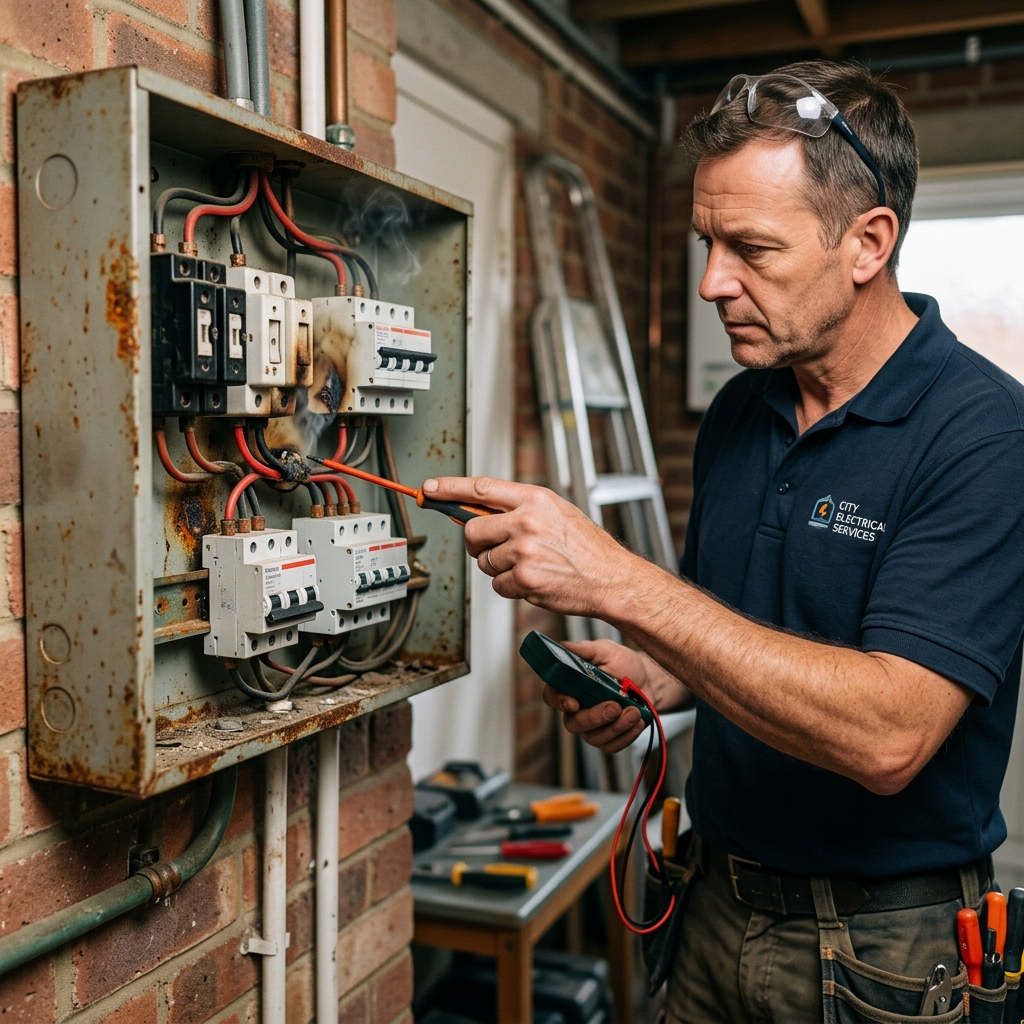
Inspect the casing of your consumer unit. can you see any yellowing or browning of the plastic? This is a tell-tale sign of overheating from the inside out. It suggests that a loose connection is arcing or that the busbar (the copper strip connecting the breakers) is under severe stress. This is not a "wait and see" scenario; it is a fire hazard in progress.
Auditory Clues
A healthy consumer unit should be silent. If you hear a buzzing, crackling, or sizzling sound, immediate action is required. This sound is usually electricity jumping across a gap (arcing). An arc flash can reach temperatures of thousands of degrees. If you hear your electrics, call a verified professional from our directory immediately.
The Renovation Trigger: Expanding Your Home
Often, the need for a consumer unit upgrade isn't driven by a fault, but by ambition. Homeowners in Warrington are increasingly choosing to improve rather than move, adding extensions, loft conversions, or garden offices. However, you cannot add modern load to a legacy system.
When you engage Builders & Extensions specialists to construct a new wing of your home, they will require a new electrical feed. An old fuse box often physically lacks the space (ways) to add new circuits for the extension. Moreover, Part P of the Building Regulations requires that any new work meets current standards. You cannot legally wire a brand-new, high-spec extension into a dangerous, 40-year-old fuse box. The electrician signing off the work will likely refuse to commission the new circuits until the head-end equipment is upgraded.
This is particularly relevant for kitchen renovations. Modern kitchens are power-hungry. Induction hobs, dual ovens, and instant hot water taps draw massive current. If you are planning a dream kitchen, factor the consumer unit upgrade into your budget early to avoid nasty surprises later.
Integration with Heating and Plumbing Systems
Your electrical system does not exist in a vacuum; it is deeply intertwined with your heating and plumbing infrastructure. Modern boilers, heat pumps, and electric showers have specific electrical requirements.
For example, if you are upgrading your bathroom, high-performance electric showers require heavy-duty cabling and strict RCD protection because of the mix of water and electricity. When you hire Plumbers & Heating Engineers to install a new combi-boiler or an unvented cylinder, they need a reliable electrical supply to control the thermostat, pumps, and ignition systems. A tripping fuse box can leave you without heat in the middle of winter. Ensuring your consumer unit is up to the task is essential for the reliability of your heating systems.
The Aesthetic Aftermath: Dealing with the Mess
It is important to be realistic about what a consumer unit upgrade entails. It is not always a simple "swap out." Modern units are often larger than their predecessors. This means the electrician may need to chase out part of the wall or mount a larger backboard. Cables may need to be re-routed to reach the new terminals.
Furthermore, during the testing phase (which we will discuss shortly), we might discover faults in your existing wiring that require wall-chasing to fix. Once the electrical safety is assured, the area around the new unit often looks like a construction site. This is where the finish matters. To ensure your hallway or utility room doesn't look scarred, you will likely need the services of Painters & Decorators to patch the plaster, sand down the disturbances, and blend the new installation seamlessly into your home's decor.
The Upgrade Process: What to Expect
Many homeowners fear the upgrade process, imagining weeks of disruption. In reality, a skilled electrician can typically replace a consumer unit in a single day, provided the existing wiring is in reasonable condition.
1. The Pre-Work Survey (EICR)
Before ripping out the old box, a conscientious electrician will recommend an Electrical Installation Condition Report (EICR). This is a health check for your wires. There is no point installing a brand new £500 consumer unit if the cables in the walls are rotting. The EICR will highlight any underlying faults that need to be rectified during the upgrade.
2. The Switch Over
On the day of the work, the power will be off for several hours. The electrician will label every circuit, remove the old unit, and install the new metal-clad board. They will extend cables if necessary and connect everything to the new MCBs and RCBOs.
3. Testing and Certification
This is the most critical part. Once the unit is on the wall, the electrician must test every single circuit to ensure it disconnects within the required time limits (usually 0.4 seconds or 300 milliseconds depending on the fault type). They will issue an Electrical Installation Certificate (EIC), which you must keep. This document is proof that your home meets Building Regulations—vital for insurance purposes and future property sales.
SPD: Surge Protection Devices
A feature of the 18th Edition regulations is the emphasis on Surge Protection Devices (SPDs). These are now commonly installed inside the consumer unit. An SPD protects your sensitive electronic equipment—computers, smart TVs, washing machines—from voltage spikes. These spikes can come from lightning strikes miles away or switching surges from the grid. Considering the value of the electronics in a modern Warrington home, the small extra cost of an SPD is an insurance policy for your gadgets.
The Cost of Inaction vs. The Cost of Upgrade
We understand that household budgets are tight. A consumer unit upgrade can cost anywhere from £450 to £800+ depending on the size of the property and the complexity of the circuits. However, viewing this as a "cost" is a mistake; it is an investment in asset protection.
Consider the alternative. Old wiring and fuse boxes are a leading cause of domestic fires in the UK. The cost of fire damage restoration, lost possessions, and potential injury far outweighs the price of an upgrade. Additionally, if you plan to rent out your property, the law now requires a "Satisfactory" EICR rating. An old board with rewireable fuses will almost certainly result in an "Unsatisfactory" grade, legally preventing you from letting the property.
Specific Considerations for Warrington Housing Stock
Warrington has a diverse range of housing. From the Victorian terraces in Latchford to the 1970s builds in Birchwood and the new developments in Chapelford, each era presents different electrical challenges.
- Victorian/Edwardian Terraces: Often have had multiple "bodge job" rewires over the last century. We often find rubber-sheathed cables (pre-1960s) which crumble when touched. A consumer unit upgrade here often reveals the need for a partial rewire.
- Post-War/1970s Homes: Often wired with aluminium cables or lacking earth wires in lighting circuits. Installing a modern RCD board in these homes can be tricky as the RCD will detect the lack of earth and trip constantly. A skilled electrician knows how to navigate this, but it requires expertise.
Conclusion: Don't Wait for the Spark
Your consumer unit is the silent guardian of your home. It works tirelessly, 24/7, handling thousands of amps of flow over its lifetime. But like any mechanical or electrical device, it has an expiration date. If your home still relies on rewirable fuses, lacks RCD protection, or shows signs of thermal damage, you are living on borrowed time.
Upgrading is not just about ticking a box for regulations; it is about ensuring that when a fault occurs—and eventually, it will—the power cuts off instantly, protecting your family and your property. Whether you are planning a major renovation with local builders or simply want peace of mind, the journey starts with that box under the stairs.
Don't wait for the smell of burning plastic or the lights to flicker out. Check your unit today, and if you see the signs discussed here, contact a verified, professional tradesperson from the Warrington Tradesmen Directory to bring your home’s safety into the 21st century.
Enjoyed this article?
Need a Verified Tradesperson in Warrington?
Browse verified local professionals across Warrington & Cheshire. Compare reviews, check qualifications, and get free quotes.