Porcelain vs Ceramic Tiles: Best Choices for Warrington Homes
Embarking on a home renovation project in Warrington often brings homeowners to a crucial aesthetic and practical crossroad: choosing the right surface finish for floors and walls. Whether you are modernising a Victorian terrace in Stockton Heath, extending a family property in Great Sankey, or revamping a new-build kitchen in Lymm, the materials you select matter. When it comes to hard-wearing, stylish surfaces, the debate of porcelain vs ceramic tiles is one every renovator must navigate. Both options offer incredible versatility, but they possess distinctly different compositions, durability ratings, and installation requirements that can significantly impact your budget and long-term satisfaction.
Understanding these differences is essential before you pick up the phone to hire professional tilers in warrington. While both tile types are crafted from clay and fired in a kiln, their manufacturing processes result in vastly contrasting physical properties. Choosing the wrong tile for a high-traffic hallway or a moisture-heavy wetroom can lead to premature cracking, chipping, or water ingress. In this comprehensive guide, we will break down the core differences, explore cost implications, and help you determine which material suits your specific lifestyle and property type across Cheshire.
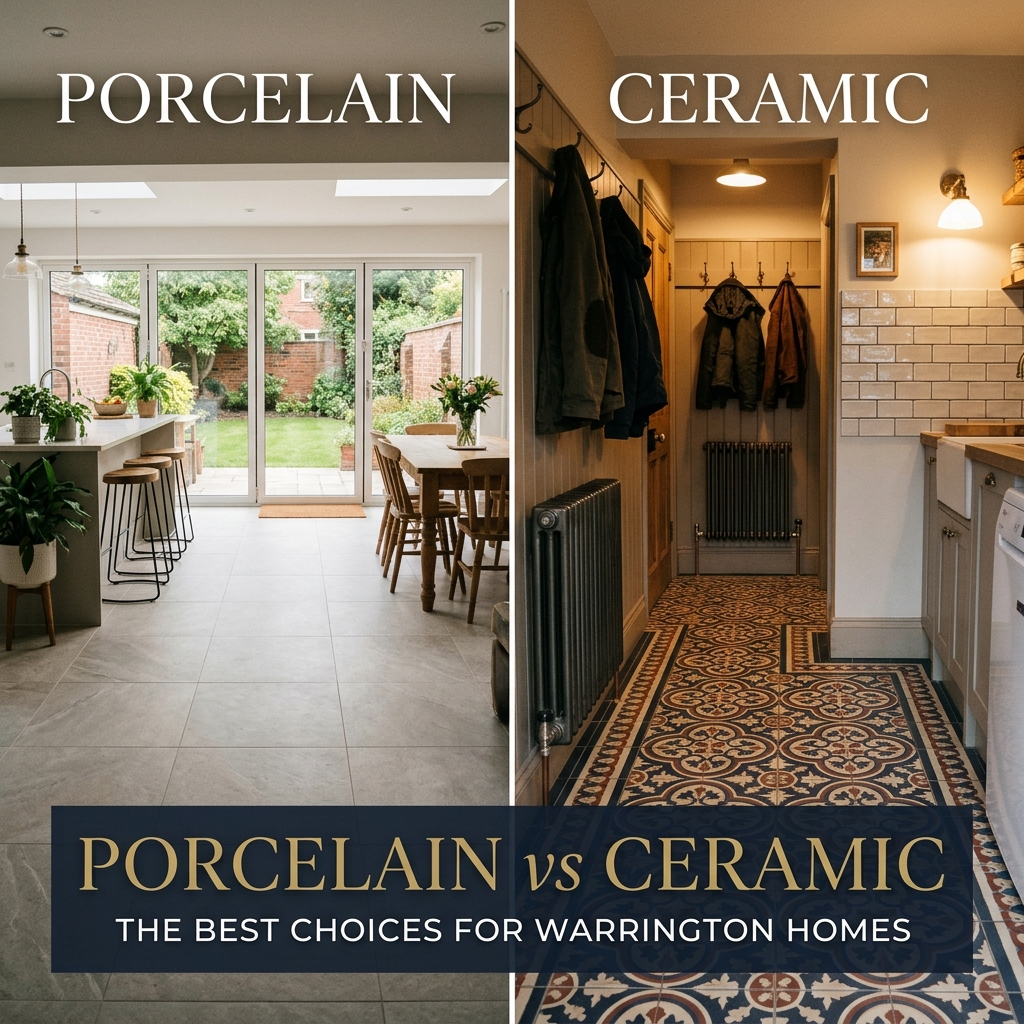
Understanding the Core Differences: Composition and Manufacture
At first glance, porcelain and ceramic tiles can look remarkably similar. Walk into any tile showroom near Appleton or Widnes, and you will likely struggle to tell them apart on the display board. However, what lies beneath the glaze is entirely different.
Ceramic tiles are made from red, brown, or white clay that is baked at a relatively low temperature. This results in a softer, more porous material. Because they are less dense, ceramic tiles are easier for professionals to cut and shape, which can sometimes translate to quicker installation times. However, this porosity also means they absorb moisture more readily if the surface glaze ever becomes compromised.
Porcelain tiles, on the other hand, are a specific type of ceramic tile, but they are crafted from much finer, denser clay (typically porcelain clay or china clay, mixed with quartz and feldspar). They are fired at extremely high temperatures in a kiln, a process known as vitrification. This melts the materials together into a glass-like, incredibly dense, and virtually non-porous structure. This fundamental difference in density is what separates their performance in everyday household environments.
Durability and Wear: Which Tile Withstands Daily Cheshire Life?
Home life can be demanding. From muddy paws trailing through the hallway after a walk along the Bridgewater Canal to dropped saucepans in a bustling kitchen, your floors take a beating. When evaluating durability in the porcelain vs ceramic tiles debate, porcelain is the undisputed heavy champion.
Because porcelain is dense and solid throughout (sometimes referred to as 'through-body' porcelain, where the colour goes all the way through), it is exceptionally resistant to chipping and cracking. If you do manage to chip a porcelain tile, the damage is far less noticeable because the core material matches the surface pattern. This makes it an ideal investment for high-traffic areas like family kitchens, hallways, and utility rooms.
Ceramic tiles are more fragile. While perfectly suitable for walls and low-to-medium footfall domestic floors, a heavy impact from a dropped mug or cast-iron skillet can chip the glaze, revealing the contrasting red or white clay underneath. If you are planning a comprehensive home overhaul, you might also need to coordinate with a local builder in Warrington to ensure your subfloors are properly reinforced, especially when laying heavy porcelain slabs.
Water Resistance and Performance in Wet Areas
When considering bathroom tiling warrington projects, moisture management is your number one priority. Bathrooms, en-suites, and downstairs cloakrooms are exposed to daily steam, splashing, and humidity.
Water absorption rates are measured by standards set for tile manufacturing:
- Porcelain: Absorbs less than 0.5% of water. It is classified as impervious, making it completely frost-proof for outdoor use and highly resistant to moisture in shower enclosures and wetrooms.
- Ceramic: Absorbs more than 0.5% of water (typically between 3% and 7%). While glazed ceramic is completely waterproof on the surface, moisture can eventually penetrate the core if grout lines fail or edges are unsealed.
For shower walls and splashbacks, high-quality glazed ceramic performs brilliantly and keeps costs manageable. However, for fully tiled wetroom floors or bathroom floors prone to standing water, porcelain provides unmatched peace of mind against long-term water damage.
Installation, Cutting, and Labour Costs
The differences between these two materials extend directly into the installation phase. If you are hiring skilled tradespeople, the choice of tile can influence your labour quote.
Ceramic tiles are softer and lighter. They are easily scored and snapped using manual tile cutters, generating minimal dust and requiring less specialized equipment. This makes ceramic a favourite for DIYers and can occasionally lower labour costs due to speed of installation.
Porcelain is a different beast entirely. Its extreme density means it cannot be cut with a standard manual snap cutter. Professional installers must use heavy-duty wet tile saws equipped with continuous diamond blades. Furthermore, laying porcelain requires specialised polymer-modified flexible tile adhesives and grouts to bond properly to the subfloor. Without these materials, porcelain tiles can pop or crack over time as the house shifts with seasonal temperature changes in Cheshire.
Cost Comparison: Initial Outlay vs. Long-Term Value
Budget is usually a primary driving factor in home improvements. Generally speaking, ceramic tiles are more affordable than porcelain. You can find fantastic ceramic ranges at very accessible price points, making them ideal for budget-conscious updates or rental property refreshes.
Porcelain carries a higher initial price tag, both for the material itself and for the specialized adhesive, grout, and labour required to install it. However, smart Warrington homeowners view porcelain as a long-term investment. Because porcelain lasts significantly longer without showing wear, you won't need to worry about replacements or repairs down the line, ultimately offering a superior return on investment.
Frequently Asked Questions
Can I use ceramic tiles on outdoor patios in Warrington?
No, you should never use standard ceramic tiles outdoors in the UK climate. Ceramic is too porous; when winter temperatures drop below freezing, any trapped moisture inside the tile will expand and cause the tile to crack or shatter. Always use exterior-grade, anti-slip porcelain pavers for garden patios and pathways.
Are porcelain tiles too heavy for bathroom walls?
Not necessarily, but weight is a critical factor. Porcelain tiles are heavier than ceramic equivalents. Before mounting large-format porcelain tiles onto bathroom walls, your tiler must assess whether the substrate (such as plasterboard or plywood) can support the combined weight of the tiles, adhesive, and grout. In some cases, wall reinforcement or tile backer boards may be required.
How do I clean and maintain porcelain vs ceramic floors?
Both tile types are exceptionally easy to maintain compared to carpets or natural stone. Regular sweeping and a gentle mop with warm water and a pH-neutral cleaner are all that is needed. Neither material requires harsh chemical sealants on the glazed surfaces, though unpolished or textured porcelain may occasionally require a deeper professional clean to lift stubborn dirt from micro-pores.
Making Your Final Decision
Ultimately, the choice between porcelain and ceramic tiles comes down to balancing your budget, the specific room's function, and your aesthetic goals. Ceramic remains a cost-effective, beautiful choice for walls and low-traffic areas, while porcelain delivers unmatched strength, water resistance, and longevity for high-traffic zones and wet environments. Whichever path you choose, ensuring professional installation is the key to a flawless, long-lasting finish that elevates your home's interior design.
Enjoyed this article?
Need a Verified Tradesperson in Warrington?
Browse verified local professionals across Warrington & Cheshire. Compare reviews, check qualifications, and get free quotes.