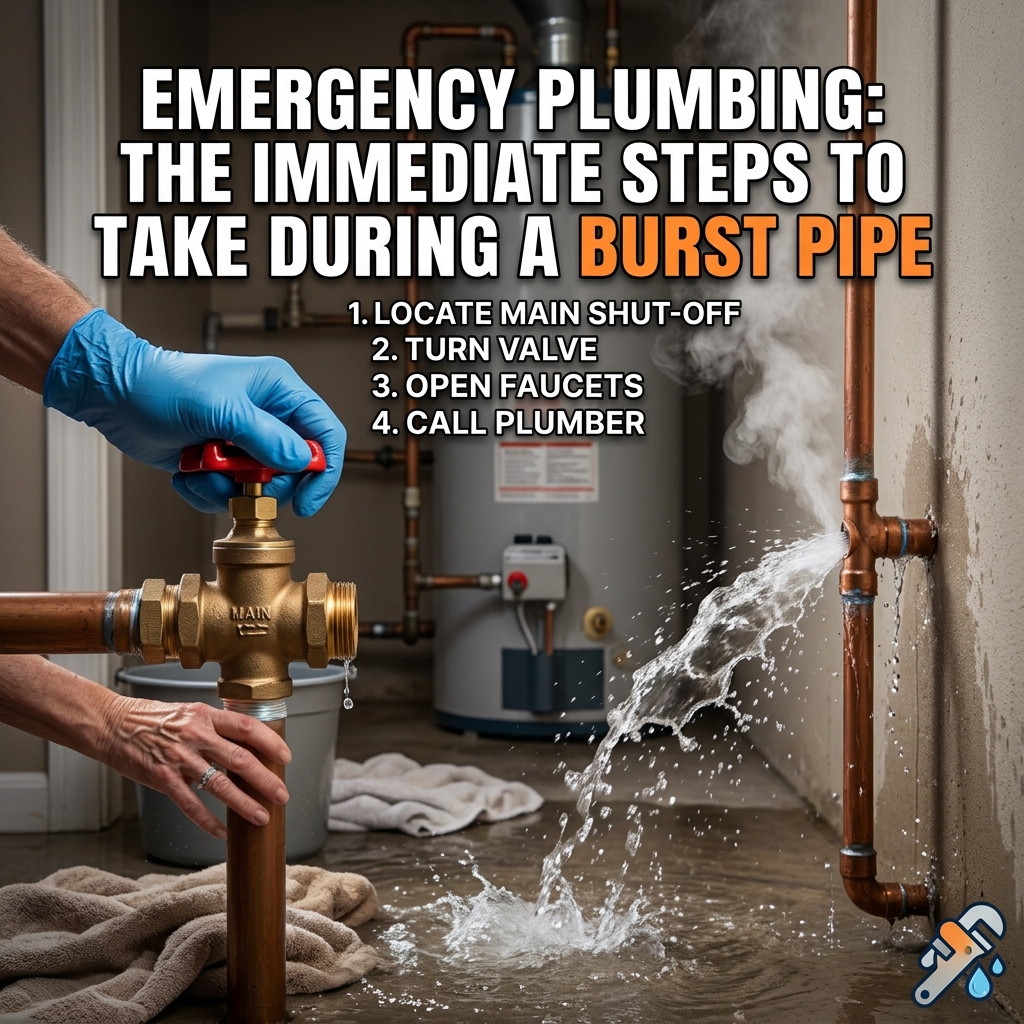
Emergency Plumbing: The Immediate Steps to Take During a Burst Pipe
2026 Warrington Plumber Hourly & Day Rates (WA1–WA13)
Accreditation standard: Gas Safe Register & WaterSafe
| Common Warrington Job | 2026 Price Range |
|---|---|
| Annual Gas Boiler Service | £75 – £110 |
| Combi Boiler Replacement (Supply & Fit) | £2,100 – £3,400 |
| Emergency Burst Pipe / Leak Repair | £95 – £180 |
| Central Heating Powerflush (3-Bed Home) | £350 – £500 |
It started as a faint hissing sound behind the bathroom wall, barely audible over the hum of the refrigerator downstairs. By the time you realized something was wrong, the ceiling plaster had already darkened to an ominous shade of grey, threatening to give way at any moment. This is the stark reality of a burst pipe, a domestic disaster that transforms a peaceful evening into a frantic race against water damage.
The Immediate Crisis: Stop, Drop, and Isolate
If you are reading this while water is actively pooling on your floor, skip the introductions. You need to stop the flow of water immediately. Every second counts when pressurized water is escaping into your home structure.
1. Locate and Shut Off the Stopcock
The most critical step is turning off the main water supply. The internal stopcock (or stop valve) is usually located under the kitchen sink, but in older Warrington properties, it might be in a hallway cupboard, under the stairs, or even in a cellar.
- Action: Turn the valve clockwise (righty-tighty) until it stops. Do not overtighten, as old valves can snap.
- If it’s seized: Do not force it with a wrench immediately. Try to loosen it gently. If it won't budge, you may need to go to the external stopcock on the street, usually found under a small plastic or metal cover on the pavement.
2. Kill the Power
Water and electricity are a lethal combination. If the water has penetrated walls, ceilings, or is near sockets, you are at risk of electrocution or starting an electrical fire.
- Action: Go to your fuse box (consumer unit) and flip the main switch to 'OFF'.
- Warning: If the fuse box itself is wet, do not touch it. You must evacuate the house and call for professional help. Once the water is contained, you will likely need verified Electricians to inspect the wiring before it is safe to re-energize the home.
3. Drain the System
Once the mains are off, water is still trapped in the pipes above the leak. You need to direct this water out of the system safely rather than letting it exit through the hole in the pipe.
- Action: Open all COLD taps. Start with the lowest taps in the house (usually the kitchen) and then open the highest ones (bathroom). This creates a vacuum that drains the water away from the leak site.
- Heating Systems: If you have a water tank, you must turn off the boiler system. Do not drain the hot water taps unless you are sure the heating system is off, as running a boiler dry can burn out the pump.
Assessment and Containment
Now that the immediate flow has stopped, the adrenaline might be fading, but the work is just beginning. You need to manage the standing water and assess the source of the issue.
Catch the Residuals
Even with the water off, the ceiling or walls may continue to drip for hours as soaked insulation and plasterboard drain.
- Bulging Ceilings: If a ceiling is bulging with water weight, it is dangerous. Place a bucket underneath and use a screwdriver to carefully poke a small hole in the center of the bulge. This allows the water to drain in a controlled stream rather than causing the whole ceiling to collapse.
- Soak Up: Use old towels, bedsheets, and a wet-dry vacuum if you have one. The faster you remove standing water, the lower your chances of severe structural rot.
Identifying the Source
Is it definitely a pipe? In the UK climate, especially around Cheshire, water ingress can sometimes be mistaken for plumbing failures. If the leak coincides with heavy rainfall or a storm, the issue might be structural external damage rather than internal plumbing.
Before ripping up floorboards, verify it isn't a roof leak traveling down internal cavities. If the water is dirty or brown, it could be runoff. In this case, you may need to consult expert Roofing Services to inspect for slipped tiles or flashing failures.
However, if the water is clean and constant (until the stopcock was turned), you are dealing with a plumbing failure.
Why Pipes Burst: The Science of Pressure
Understanding why the pipe burst is essential for explaining the situation to your plumber and insurance company. In Warrington and the surrounding areas, we see three primary culprits.
1. Frozen Pipes (Expansion)
This is the most common cause during winter. When water freezes, it expands by approximately 9%. If the pipe is rigid (like copper) and there is no room for expansion, the pressure builds up to 20,000 PSI or more. The ice blocks the pipe, and the pressure mounts between the blockage and the closed tap until the metal splits.
2. Water Hammer and High Pressure
'Water hammer' is that clunking sound you hear when a tap is turned off suddenly. It sends a shockwave through the pipes. Over time, this shockwave weakens joints and seals. If your water pressure regulator fails, the mains pressure can exceed the pipe’s rating, causing a blowout at the weakest point.
3. Corrosion and Age
Many homes in the North West still utilize older plumbing infrastructures. Copper pipes can suffer from pinhole leaks due to corrosion from the inside out, often caused by the chemical composition of the water or a reaction between the copper and flux used during installation decades ago.
Temporary Fixes While You Wait
It might be several hours before a tradesperson can reach you. If you have identified the split and it is accessible, you can attempt a temporary patch to allow you to turn the water back on briefly (for flushing toilets or filling a kettle).
WARNING: These are temporary measures. Do not treat them as permanent repairs.
Epoxy Putty
This is a two-part clay that you knead together until it activates.
- Dry the pipe thoroughly (crucial).
- Mold the putty over the crack or hole.
- Let it cure for the time specified on the package (usually 15-60 minutes).
- This creates a hard seal that can withstand mains pressure for a short time.
Pipe Repair Clamps
A repair clamp consists of a rubber sleeve and a metal brace. You wrap the rubber over the hole and screw the metal brace down tight. This is the most reliable temporary fix and is worth keeping in a basic home toolkit.
The Rubber and Jubilee Clip Method
If you have no kit, find a piece of thick rubber (an old bicycle inner tube or a section of garden hose). Wrap it tight around the burst section and secure it with hose clamps (jubilee clips) on either side of the split.
The Cleanup: Mitigating Long-Term Damage
The water is gone, but the damp remains. This is the breeding ground for mold, which can start to grow within 24 to 48 hours. The 'secondary damage' from a burst pipe is often more expensive than the plumbing repair itself.
Drying Out
- Dehumidifiers: Rent industrial-grade dehumidifiers if the saturation is bad. Domestic units are often too slow for flood damage.
- Air Circulation: Open windows if the humidity outside is lower than inside. Use fans to circulate air across wet carpets and walls.
- Furniture: Move wet furniture away from walls to allow airflow behind them. Place aluminum foil or wood blocks under furniture legs to prevent staining the carpet.
Documentation for Insurance
Before you throw away ruined carpets or start painting over water stains, document everything.
- Take high-resolution photos of the burst pipe.
- Photograph the damage to floors, walls, and personal items.
- Keep the damaged pipe piece if the plumber cuts it out.
- Log the time the leak was discovered and the steps you took.
Insurance adjusters need proof. If you fix it and clean it up too perfectly before they assess it, your claim might be undervalued.
Why You Need a Professional Plumber
While a DIY patch can get you through the night, plumbing is not a hobbyist endeavor when it comes to pressurized mains lines. A burst pipe indicates a failure in the system integrity. A professional will not only replace the broken section but will also inspect the rest of the system for signs of similar fatigue.
Furthermore, soldering joints in tight spaces presents a fire risk, and push-fit connectors (plastic plumbing) require specific preparation to ensure they don't blow off under pressure later. For peace of mind and insurance compliance, you should always engage local, accredited Plumbers & Heating Engineers to effect the permanent repair.
Prevention: Winterizing Your Warrington Home
Once the chaos has subsided, the focus must shift to prevention. You never want to experience this again. Here is a checklist for winterizing your plumbing.
1. Lagging
Pipe insulation, or 'lagging', is cheap and effective. It involves wrapping foam tubes around your pipes. Prioritize:
- Pipes in the loft/attic.
- Pipes in the garage.
- Pipes under floorboards near external air bricks.
2. Smart Leak Detectors
Modern technology offers excellent protection. Smart leak detectors clip onto your pipes and monitor flow rates. If they detect continuous flow (like a burst pipe while you are at work), they can automatically shut off the water and send an alert to your phone. It is a significant investment but cheaper than a flooded kitchen.
3. Keep the Heating On
If you are going away during the winter, do not turn the heating off completely. Set the thermostat to a 'frost protection' setting (usually around 12-15°C). This keeps the ambient temperature high enough to prevent pipes in the walls from freezing.
4. Service the Boiler
A well-maintained heating system circulates water efficiently, reducing the risk of stagnant water freezing in the peripheral pipes. Regular servicing by qualified engineers ensures your system helps protect the fabric of your home.
When Water Damages Electrical Systems
We touched on this earlier, but it bears repeating in detail. Water damage to electrical systems is insidious. Water can corrode contacts inside sockets, causing high resistance and eventual fires weeks after the event.
If water ran down the inside of a wall, it likely ran over cabling. Modern cabling is PVC coated and resistant to water, but the junction boxes and termination points are not.
Do not rely on a hairdryer to dry out a socket. The moisture trapped inside the mechanism can cause arcing. If any electrical point was soaked, it must be replaced. Always consult with certified tradespeople. Our directory can connect you with trusted local professionals who understand the specific housing stock in Warrington.
Conclusion
A burst pipe is a traumatic event for any homeowner. The sound of rushing water triggers a primal panic, but by keeping a cool head and following the isolation protocols, you can drastically reduce the damage.
Remember the hierarchy of safety:
- Life Safety: Ensure no electrical risks.
- Stop the Source: Shut off the water.
- Mitigate: Drain the system and dry the area.
- Repair: Call the professionals.
Whether you need immediate assistance with the leak or help restoring the electrical safety of your home, the Warrington Tradesmen Directory is here to connect you with verified local experts. Don't wait for the damp to set in; take action immediately to protect your property.
Enjoyed this article?
Need a Verified Tradesperson in Warrington?
Browse verified local professionals across Warrington & Cheshire. Compare reviews, check qualifications, and get free quotes.