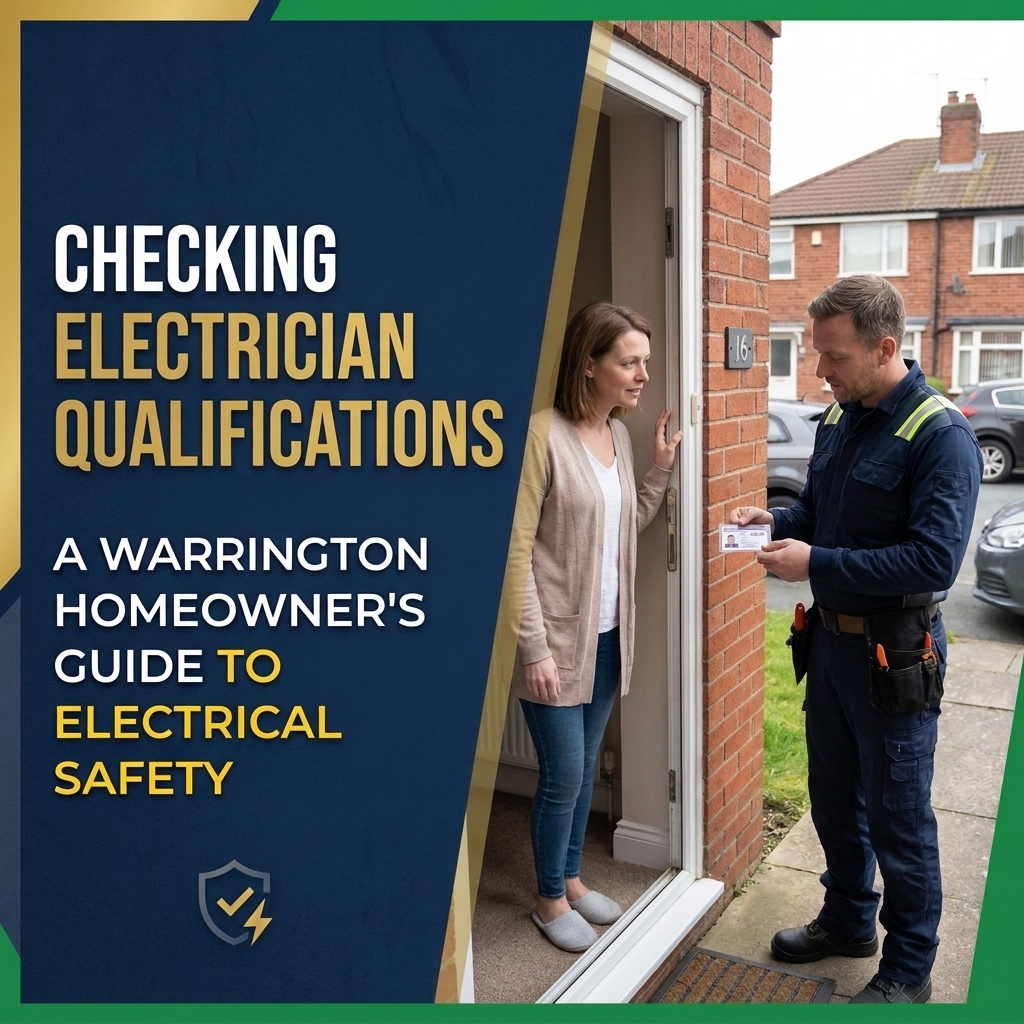
Checking Electrician Qualifications: A Warrington Homeowner's Guide to Electrical Safety
2026 Warrington Electrician, Rewire & EV Charger Costs (WA1–WA13)
Accreditation standard: NICEIC / NAPIT Part P Registered
| Common Warrington Job | 2026 Price Range |
|---|---|
| Consumer Unit (Fuse Box) Upgrade with SPD | £480 – £750 |
| EICR Landlord / Homebuyer Safety Certificate | £140 – £220 |
| 7kW Home EV Charger Installation | £850 – £1,250 |
| Full 3-Bed House Rewire | £3,800 – £5,500 |
When it comes to your home's electrical systems, taking shortcuts or hiring unqualified individuals is simply not an option. The safety of your family and property hinges on competent, certified work. As a homeowner in Warrington, knowing how to properly check electrician qualifications Warrington is paramount. This guide from Warrington Tradesmen will equip you with the essential knowledge to make informed decisions, ensuring that any electrical work in your home, from a simple socket repair to a full rewire, is carried out to the highest professional standards.
Electrical work isn't just about connecting wires; it's about adhering to stringent safety regulations, understanding complex circuits, and preventing potentially life-threatening hazards like electrical fires or shocks. That's why securing the services of a genuinely qualified and experienced electrician is non-negotiable. Let’s delve into what makes a good electrician, how to verify their credentials, and why choosing a certified electrician Warrington is always the smartest move.
Why Qualifications Matter: More Than Just Wires
Many homeowners in areas like Lymm, Great Sankey, and Appleton might be tempted by a cheaper quote from an unregistered individual, but the risks far outweigh any potential savings. Unqualified electrical work can lead to:
- Fire Hazards: Incorrect wiring, overloaded circuits, or faulty installations are prime causes of electrical fires.
- Electric Shocks: Poorly installed or exposed wiring can pose a severe electrocution risk to residents and visitors.
- Voided Insurance: Many home insurance policies require that electrical work be carried out by qualified professionals. If a claim arises from faulty electrical work, your insurer may refuse to pay out if the installer wasn't certified.
- Non-Compliance with Building Regulations: In the UK, electrical installations in homes must comply with Part P of the Building Regulations. Only registered electricians can 'self-certify' their work as compliant, saving you the hassle and cost of involving local authority building control.
- Hidden Dangers: Problems from unqualified work might not be immediately apparent, festering behind walls or in your consumer unit until a critical failure occurs.
Choosing a qualified electrician provides peace of mind, knowing that the work adheres to strict safety standards and regulations, protecting your home and loved ones.
Understanding UK Electrical Qualifications & Standards
The world of electrical qualifications can seem a bit like alphabet soup, but understanding the key certifications will empower you to vet potential electricians effectively.
Core Qualifications & Apprenticeships
Most competent electricians in the UK will have completed a rigorous apprenticeship or college course leading to recognised qualifications. Look out for:
- City & Guilds Qualifications: These are the industry standard. Key qualifications include:
- Level 2 and 3 Diplomas in Electrical Installation (e.g., 2365, 2357, 2339): These cover the fundamental knowledge and practical skills required for electrical work.
- NVQ Level 3 in Electrotechnical Technology: This is a work-based qualification demonstrating competence in a real-world setting.
- City & Guilds 2391 Inspection and Testing: This qualification is crucial for electricians who conduct EICRs (Electrical Installation Condition Reports) and inspect existing installations.
- BS 7671 (18th Edition Wiring Regulations): This isn't a qualification but a mandatory standard. Every competent electrician must be up-to-date with the latest edition of the 'Wiring Regulations' (currently the 18th Edition). This document details how electrical installations should be designed, installed, inspected, and tested to ensure safety. An electrician should be able to demonstrate their knowledge of this standard.
Approved Contractor Schemes: The Gold Standard
Beyond individual qualifications, an electrician's membership in an approved contractor scheme is a strong indicator of their professionalism and competence. These schemes are operated by organisations authorised by the government to ensure their members meet certain standards and are regularly assessed.
The most widely recognised schemes for electricians working in domestic properties include:
- NICEIC (National Inspection Council for Electrical Installation Contracting): This is arguably the most well-known and respected. An NICEIC electrician Warrington means they are regularly assessed to ensure their work meets current safety standards and regulations. NICEIC-registered contractors are also backed by a Platinum Promise, offering protection to homeowners should work not meet the expected standards.
- ELECSA: Similar to NICEIC, ELECSA assesses and approves electricians, ensuring they meet the requirements of Building Regulations in England and Wales. ELECSA is also part of the wider NICEIC group.
- NAPIT (National Association of Professional Inspectors and Testers): Another reputable scheme that registers electricians who meet strict technical and safety standards. NAPIT members are also able to self-certify their work under Part P.
Choosing an electrician registered with one of these schemes offers significant peace of mind. It signifies that their work is regularly scrutinised, they are insured, and they have processes in place to handle complaints, should they arise.
The Importance of Electrical Safety Certificates
Electrical safety certificates are official documents issued by qualified electricians to confirm that electrical work or an entire installation meets the required safety standards.
Key Certificates You Might Encounter:
-
Electrical Installation Certificate (EIC): This is issued when a new electrical installation is completed or when significant alterations are made to an existing one (e.g., a new consumer unit, an extension rewire). It confirms that the work complies with BS 7671.
-
Minor Electrical Installation Works Certificate (MEIWC): Used for smaller, less complex electrical work, such as adding a new circuit or replacing a single accessory. It certifies that the minor works comply with relevant standards.
-
Electrical Installation Condition Report (EICR): This is a detailed inspection and test report on the condition of an existing electrical installation. It identifies any damage, deterioration, defects, or dangerous conditions. It's recommended every 10 years for owner-occupied homes (or 5 years for rental properties) or when buying/selling a property. If you’re purchasing a home in Stockton Heath or Widnes, insisting on an up-to-date EICR is a very sensible move.
These certificates are not just paperwork; they are your proof of safety and compliance. Always ensure your electrician provides the correct certificate upon completion of their work. Without them, you have no formal record that the work meets the necessary safety standards.
How to Verify an Electrician's Credentials in Warrington
Now that you know what to look for, here's how to actively check an electrician's qualifications and ensure they are the right fit for your Warrington home.
1. Ask for Proof of Qualifications and Scheme Membership
Don't be shy! A reputable electrician will be proud to show you their credentials. Ask to see:
- Certificates: For their City & Guilds, NVQ, and 18th Edition Wiring Regulations updates.
- Scheme ID Card: If they are a member of NICEIC, ELECSA, or NAPIT, they should have an ID card displaying their registration.
- Insurance Documents: Crucially, ask for proof of Public Liability Insurance. This protects you if property damage or injury occurs as a result of their work.
2. Check with the Scheme Providers Directly
The best way to verify membership is by using the official online registers:
- NICEIC / ELECSA: Visit the Electrical Safety First website or the NICEIC / ELECSA websites directly. They have a 'Find a Contractor' tool where you can input the electrician's name or company details to confirm their registration. This is essential when looking for a truly NICEIC electrician Warrington.
- NAPIT: Similarly, NAPIT has a 'Find a Registered Installer' search function on their website.
These online checks are quick, free, and provide definitive proof of registration.
3. Request References and Check Online Reviews
Word-of-mouth and online reviews are invaluable. Ask the electrician for references from previous clients, especially for similar types of work. Also, check independent review platforms (like Google, Trustpilot, or checkatrade.com) for feedback on their professionalism, reliability, and quality of work.
At Warrington Tradesmen, we go a step further. We understand the importance of trust, which is why we vet our listed electricians in Warrington to ensure they hold the necessary qualifications and registrations. Our platform aims to connect you with reliable, skilled professionals who meet stringent standards.
4. Get Multiple Quotes and Detailed Breakdown
Always obtain at least three written quotes for any significant electrical work. A detailed quote should break down labour, materials, and any other associated costs. Be wary of quotes that are significantly lower than others, as this could be a red flag for cutting corners or using unqualified labour.
Common Electrical Jobs & Expected Qualifications
Different electrical jobs, while all requiring qualified professionals, might involve varying levels of complexity and specific certifications.
- Consumer Unit Upgrades: This is a critical safety upgrade. The electrician must be fully qualified (e.g., C&G Level 3, 18th Edition) and registered with an approved scheme (NICEIC, ELECSA, NAPIT) to self-certify the work under Part P. An EIC will be issued.
- Full or Partial Rewires: Extensive work like this demands the highest level of qualification and experience. Again, scheme membership and the ability to issue an EIC are essential.
- New Socket/Light Fitting Installation: Even seemingly minor additions require adherence to BS 7671. A Minor Electrical Installation Works Certificate should be issued for these.
- Outdoor Lighting or Power: Working outdoors introduces additional considerations for weatherproofing and earth bonding. Qualified electricians understand these nuances.
- EV Charger Installation: With the rise of electric vehicles, many homeowners are installing EV chargers. Specific training and qualifications are often required for this, beyond general electrical skills.
For more extensive home renovation projects, such as an extension or a kitchen overhaul, you'll often find electricians working in conjunction with other skilled trades. For example, a reputable builder in Warrington will often have trusted, qualified electricians they collaborate with to ensure seamless project delivery and compliance.
What to Do If You Suspect Unqualified Work
If you've had electrical work done and now have doubts about the installer's qualifications or the safety of the work, take immediate action:
- Consult another Qualified Electrician: Arrange for a certified electrician Warrington to carry out an EICR on the suspect work. They can identify faults, advise on necessary remedial work, and issue a report.
- Contact the Scheme Provider: If the original electrician claimed to be registered with a scheme but you've found this to be false, report them to the scheme directly.
- Report to Trading Standards: If you suspect fraudulent activity or unsafe work by an unregistered individual, you can report it to Trading Standards via the Citizens Advice consumer helpline.
- Local Authority Building Control: If the work was not self-certified by a Part P registered electrician, it might not be compliant with Building Regulations. Your local authority's building control department can advise on the next steps, which may include having the work inspected and remedied by a certified professional.
Never attempt to fix electrical issues yourself unless you are qualified. Electricity is unforgiving, and professional intervention is always the safest route.
Frequently Asked Questions About Electrician Qualifications
Q1: How can I check electrician qualifications in Warrington?
To check electrician qualifications in Warrington, first ask the tradesperson for proof of their City & Guilds (e.g., Level 3 Diploma, 18th Edition Wiring Regulations) and membership in an Approved Contractor Scheme like NICEIC, ELECSA, or NAPIT. Then, use the 'Find a Contractor' tool on the respective scheme's website (e.g., NICEIC.com) or the Electrical Safety First website to verify their registration using their name or company details. Always ask for proof of Public Liability Insurance too.
Q2: What's an NICEIC electrician and why should I choose one in Warrington?
An NICEIC electrician Warrington is a professional who is registered with the National Inspection Council for Electrical Installation Contracting (NICEIC), the UK's leading electrical assessment and certification body. Choosing one means they are regularly assessed to ensure their work meets current safety standards and Building Regulations. They can self-certify their work under Part P of Building Regulations, offer a Platinum Promise (insurance-backed warranty), and typically provide a higher standard of workmanship and safety, protecting your home and family.
Q3: Do I always need an electrical safety certificate?
You don't always need an EICR (Electrical Installation Condition Report) for your own home unless you're selling it, but it's highly recommended every 10 years or when you buy a property. For new electrical installations or significant alterations, an Electrical Installation Certificate (EIC) is legally required and must be issued by a qualified, Part P registered electrician. For minor works, a Minor Electrical Installation Works Certificate (MEIWC) should be provided. These certificates are crucial for proving the safety and compliance of the work.
Q4: What's the difference between an 'approved contractor' and a 'domestic installer'?
Both 'Approved Contractor' and 'Domestic Installer' are classifications within schemes like NICEIC. An 'Approved Contractor' typically has a broader scope of work, including industrial, commercial, and domestic installations, and is assessed to a higher level of technical competence across a wider range of activities. A 'Domestic Installer' is specifically assessed and registered to carry out electrical work in domestic properties (homes). Both can self-certify their work under Part P of Building Regulations for domestic installations, but the Approved Contractor designation implies a wider range of capabilities and experience.
Final Thoughts on Electrical Safety in Warrington
Your home in Warrington, whether it's in Great Sankey, Appleton, or anywhere else in Cheshire, deserves the highest standard of electrical safety. By understanding the qualifications, certifications, and approved contractor schemes, you empower yourself to make safe and smart choices when hiring an electrician. Never compromise on safety; always choose a qualified, certified electrician Warrington.
For peace of mind and access to vetted professionals, trust Warrington Tradesmen to connect you with the right expertise. From electrical services to other home improvements, our directory simplifies finding reliable local trades. Perhaps you're planning a home office and need a skilled carpenter to build bespoke storage, or considering a complete renovation requiring multiple trades. Whatever your project, ensure every tradesperson you hire is fully qualified and insured. Your safety depends on it.
Enjoyed this article?
Need a Verified Tradesperson in Warrington?
Browse verified local professionals across Warrington & Cheshire. Compare reviews, check qualifications, and get free quotes.