Bespoke Concrete Formwork: Adapting Solutions for Warrington Projects
2026 Warrington Builder, Extension & Loft Costs (WA1–WA13)
Accreditation standard: Federation of Master Builders (FMB) & TrustMark
| Common Warrington Job | 2026 Price Range |
|---|---|
| Single-Storey Rear Extension (20m²) | £38,000 – £52,000 |
| Single Garage Conversion to Living Space | £9,500 – £15,000 |
| Load-Bearing Wall Knock-Through (RSJ Steel) | £2,200 – £3,800 |
| Velux / Dormer Loft Conversion | £28,000 – £48,000 |
In the vibrant and evolving landscape of Warrington, from the bustling town centre to the tranquil outskirts of Lymm and Stockton Heath, homeowners and developers are increasingly seeking construction solutions that are not just functional but also perfectly tailored to their unique visions. This is where the power of bespoke concrete formwork comes into its own. Far from a one-size-fits-all approach, bespoke formwork provides the essential framework that allows concrete to be poured and cured into virtually any shape, size, or structural requirement imaginable. For those undertaking ambitious building projects or specific architectural designs in Warrington, understanding and utilising custom concrete forms is paramount to achieving exceptional, lasting results.
Whether you're planning an intricate retaining wall, a uniquely shaped foundation, a stunning architectural feature, or robust residential concrete structures that demand precision, the ability to adapt formwork to your precise specifications is a game-changer. This comprehensive guide will delve into the world of bespoke concrete formwork, exploring its applications, benefits, and what Warrington homeowners need to know when embarking on such a project. We'll show you why investing in expert bespoke formwork Warrington services means laying the groundwork for truly outstanding construction.
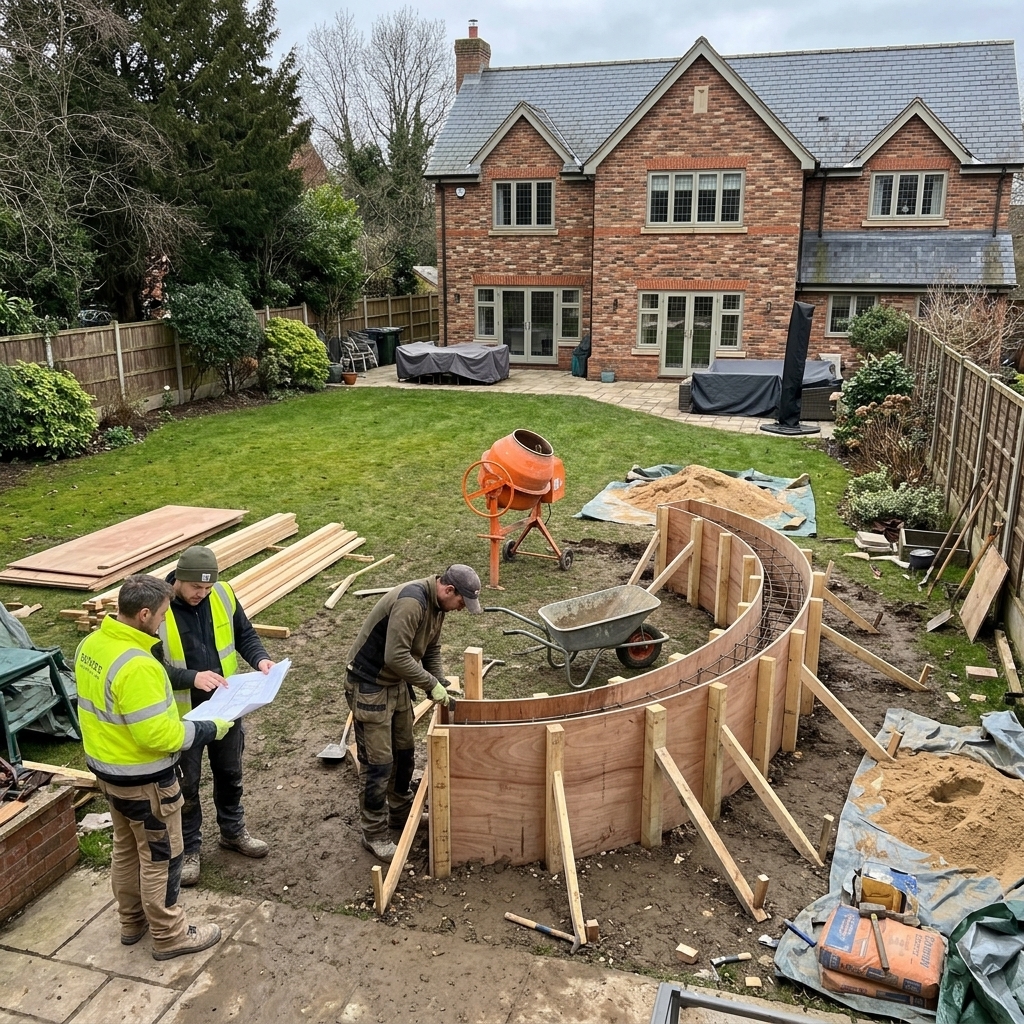
What is Bespoke Concrete Formwork and Why Is It Essential for Quality Construction?
At its heart, formwork refers to the temporary mould or casing into which fresh concrete is poured. It holds the concrete until it cures and gains sufficient strength to support itself. While standard, off-the-shelf formwork systems exist for common shapes like rectangular columns or flat slabs, they often fall short when a project demands creativity, precision, or non-standard dimensions.
This is where bespoke formwork enters the picture. Unlike generic solutions, bespoke concrete formwork is meticulously designed and fabricated for a specific project. It's custom-built to match exact architectural drawings and structural specifications, ensuring that the final concrete element achieves the desired shape, texture, and structural integrity. For Warrington properties, where space, aesthetics, and functionality often require tailored approaches, this level of customisation is not just a luxury; it's an absolute necessity for quality outcomes.
The significance of bespoke formwork cannot be overstated. It ensures:
- Architectural Freedom: Enables the creation of complex curves, angles, textures, and features that would be impossible with standard forms. Think unique garden walls, cantilevered structures, or custom foundation shapes for awkwardly shaped plots.
- Precision and Accuracy: Custom concrete forms are engineered to millimetre precision, guaranteeing that the finished concrete element adheres perfectly to design specifications, reducing waste and rework.
- Structural Integrity: By creating forms that precisely match the engineering requirements, bespoke solutions ensure the concrete cures correctly, leading to stronger, more durable residential concrete structures.
- Enhanced Aesthetics: High-quality bespoke formwork can impart specific finishes to the concrete surface, from smooth and polished to textured and patterned, elevating the overall aesthetic appeal of the build.
- Problem Solving: For challenging sites or specific structural constraints in areas like Great Sankey or Appleton, bespoke formwork allows builders to overcome obstacles and implement practical, effective solutions.
The Versatility of Custom Concrete Forms in Warrington's Building Landscape
The applications for custom concrete forms across Warrington and wider Cheshire are incredibly diverse, stretching across residential, commercial, and even public projects. Their ability to adapt formwork means they're not limited to just foundations; they're integral to shaping the very character of a building or landscape feature.
Residential Applications:
- Unique Foundations: For properties with irregular plot shapes or specific structural needs, custom formwork ensures a perfectly fitting and stable foundation, crucial for any new build or extension.
- Architectural Concrete Features: Imagine a sweeping, curved concrete staircase, a sleek fireplace surround, or a striking garden bench that seamlessly integrates into your outdoor space. Bespoke formwork makes these aspirations a reality.
- Retaining Walls: Especially on sloped sites or for creating tiered garden designs, custom retaining walls offer both structural support and aesthetic appeal. A skilled landscaper often works hand-in-hand with builders to design and implement these features effectively.
- Swimming Pools and Water Features: Creating freeform or uniquely shaped pools requires intricate, custom-designed formwork to achieve the desired curves and depths.
- Basements and Cellar Conversions: Ensuring watertight and structurally sound walls for subterranean spaces often relies on precision formwork tailored to the existing structure and ground conditions.
Commercial & Public Projects:
While our focus is primarily on homeowners, it's worth noting that bespoke formwork plays a critical role in larger projects too. From intricate bridge elements to custom seating areas in public parks, or even decorative cladding for commercial buildings in Widnes, the principle remains the same: tailoring the concrete to the exact design specifications.
The adaptability of bespoke formwork is truly what sets it apart. It allows designers and builders in Warrington to push the boundaries of conventional construction, delivering results that are both visually stunning and incredibly robust. This is particularly valuable in a region where historical structures blend with modern developments, often requiring sensitive and creative building solutions.
Designing and Constructing Custom Concrete Forms: A Detailed Process
The creation of custom concrete forms is a highly skilled process that requires meticulous planning, precise engineering, and expert craftsmanship. It’s a collaborative effort, typically involving architects, structural engineers, and specialist builders or carpenters. Here’s a breakdown of the key stages:
1. Initial Design and Engineering
- Concept Development: This begins with the homeowner's vision or the architect's design. Detailed drawings are created, outlining the exact dimensions, curves, angles, and finishes required for the concrete element.
- Structural Analysis: Engineers assess the structural requirements, calculating the load-bearing capacity, concrete pressure, and reinforcement needed. This informs the strength and design of the formwork itself.
- Material Selection: The choice of material for the formwork is critical. Common options include:
- Timber/Plywood: Versatile and cost-effective, ideal for many bespoke applications, especially where complex shapes are needed. A skilled carpenter is often essential for crafting these intricate timber forms.
- Steel: Offers high strength and durability, often used for repetitive, large-scale projects or where a very smooth finish is desired.
- Plastic/Fibreglass: Excellent for intricate details, curved surfaces, or specific textures, providing a high-quality finish.
2. Fabrication of the Formwork
Once the designs are finalised and materials chosen, the actual fabrication begins. This stage demands exceptional precision:
- Cutting and Shaping: Materials are cut, bent, and shaped according to the detailed drawings. This might involve CNC machining for highly complex or repetitive parts, or skilled hand-craftsmanship for unique, intricate timber forms.
- Assembly: The individual components are then assembled, often off-site in a controlled environment, ensuring all joints are tight and connections are secure to prevent concrete leakage during the pour.
- Finishing: If a particular surface finish is required for the concrete (e.g., smooth, patterned), the interior surface of the formwork might be treated or lined with special materials. Release agents are applied to ensure easy removal after the concrete has cured.
3. On-Site Installation and Pouring
With the bespoke formwork fabricated, it's transported to the site and meticulously installed:
- Erection: The formwork is carefully erected in its precise location, often requiring significant shoring and bracing to withstand the immense pressure of wet concrete.
- Reinforcement: Steel rebar is placed within the formwork as per the engineering drawings, providing the tensile strength the concrete needs.
- Concrete Pour: The concrete is then poured into the formwork, carefully vibrated to eliminate air pockets and ensure a dense, even finish.
- Curing: The concrete is left to cure for a specified period, gaining strength. This period is crucial and must not be rushed.
- Stripping: Once sufficiently cured, the formwork is carefully removed, revealing the finished concrete structure. The quality of this stripping process is vital to maintaining the integrity and aesthetics of the concrete.
Every step of this process, from initial design to final stripping, requires a highly skilled team that understands the nuances of concrete and formwork. This expertise is exactly what you should expect from professionals offering bespoke formwork Warrington services.
Cost Considerations for Bespoke Formwork in Warrington Projects
One of the first questions homeowners in areas like Stockton Heath or Lymm ask is, "How much does bespoke concrete formwork cost?" It's important to understand that bespoke solutions, by their very nature, typically incur higher costs than standard, off-the-shelf formwork. However, this investment often translates into superior quality, greater aesthetic appeal, and a longer-lasting, more robust structure, potentially saving money in the long run on repairs or compromises.
Factors Influencing Cost:
- Complexity of Design: The more intricate the shape, curves, or angles, the more time and skill required for design and fabrication, directly impacting the cost.
- Material Choice: Timber formwork is generally more cost-effective than steel or specialised plastic/fibreglass forms. However, the choice depends on the desired finish, structural demands, and reusability (though for bespoke, it's often a one-off).
- Size and Volume: Larger concrete elements naturally require more formwork material and more labour for erection and stripping.
- Access to Site: Difficult access can increase labour costs for transporting materials and assembling the formwork.
- Desired Finish: If a particularly smooth, textured, or architectural finish is required, this may involve additional treatments to the formwork and more meticulous pouring and curing processes.
- Labour Rates: Skilled labour, especially for specialised carpentry or fabrication, will be a significant component of the overall cost.
Typical Cost Indications (UK Average, subject to Warrington variances):
It's challenging to give exact figures without a specific project, as bespoke formwork is priced per project, not per linear meter in the same way standard work might be. However, to give you a rough idea:
- For a relatively straightforward bespoke feature, such as a custom planter or a small, uniquely shaped retaining wall, the formwork fabrication and installation could range from £500 to £2,000+, excluding the concrete and reinforcement itself.
- For more complex residential concrete structures, such as a custom-shaped swimming pool shell or an intricate architectural concrete facade, the formwork alone could easily run into £5,000 to £20,000+, depending on the scale and complexity.
- Larger, highly complex projects demanding advanced engineering and sophisticated materials could see formwork costs exceeding £30,000.
These figures are illustrative. Always obtain detailed, itemised quotes from several experienced local tradesmen. Remember, while the upfront cost might seem higher, the long-term benefits in durability, aesthetics, and structural integrity often justify the investment in bespoke formwork.
Choosing the Right Builder for Your Bespoke Formwork Project in Warrington
Given the precision and expertise required, selecting the right tradesperson for your bespoke concrete formwork project is paramount. You need a team with a proven track record, not just in general building, but specifically in creating and working with custom concrete forms.
Here’s what to look for when seeking a builder for bespoke formwork Warrington projects:
- Specialised Experience: Ask for examples of past projects involving bespoke formwork. Look for a portfolio that showcases complex shapes, high-quality finishes, and strong structural elements.
- Design and Engineering Capability: A good builder will either have in-house design capabilities or strong relationships with structural engineers who can translate your vision into precise technical drawings.
- Craftsmanship and Attention to Detail: Bespoke formwork demands meticulous care. Assess their approach to planning, their understanding of concrete properties, and their commitment to a flawless finish.
- Clear Communication: You need a builder who can clearly explain the process, material choices, potential challenges, and cost implications. Transparent communication is key to a successful project.
- References and Reviews: Always check references and read reviews from previous clients, especially those who have undertaken similar custom concrete form projects.
- Insurance and Certifications: Ensure the builder is fully insured and adheres to all relevant building regulations and safety standards.
At Warrington Tradesmen, we connect homeowners with trusted, verified local experts. When searching for professionals capable of delivering exceptional bespoke formwork, head over to our Builder category to find experienced tradespeople in your area who specialise in concrete and structural work. Don't compromise on expertise when your project demands a tailored touch.
Frequently Asked Questions About Bespoke Concrete Formwork
Q1: Is bespoke concrete formwork only for large-scale commercial projects?
A: Absolutely not! While bespoke formwork is common in large commercial builds, it's increasingly sought after by homeowners in Warrington for residential concrete structures. It's ideal for unique garden features, custom foundations for extensions, architectural elements like curved walls or stairs, and any project where standard forms simply won't achieve the desired aesthetic or structural outcome. Essentially, if you need custom concrete forms that deviate from basic shapes, bespoke formwork is the solution.
Q2: How does bespoke formwork improve the durability of a concrete structure?
A: Bespoke formwork directly contributes to durability by ensuring the concrete cures in the exact, structurally engineered shape required, without compromise. Precision-built forms prevent concrete leakage, maintain consistent wall thickness, and allow for proper vibration to eliminate air pockets, leading to denser, stronger, and more uniform concrete. When tradesmen adapt formwork to precise specifications, it minimises weak points and enhances the overall longevity and resilience of the structure.
Q3: What are the main materials used for bespoke formwork in Warrington?
A: The primary materials for bespoke formwork include timber (often plywood or specialist engineered wood products), steel, and sometimes plastics or fibreglass. Timber is highly versatile and cost-effective for unique shapes, allowing skilled carpenters to craft intricate custom concrete forms. Steel is used for heavy-duty applications or where a very smooth, consistent finish is needed, while plastics/fibreglass are excellent for complex curves and detailed surface textures. The choice depends on the project's specific requirements, budget, and desired finish.
Q4: How long does the bespoke formwork process add to a typical construction timeline?
A: The fabrication and installation of bespoke formwork can add a significant amount of time compared to using off-the-shelf systems. The design and engineering phase for custom concrete forms alone can take several days to weeks, depending on complexity. Fabrication might take another week or two, followed by careful on-site erection. However, this upfront investment in time is crucial for achieving the desired precision and quality, often preventing costly rework later. Your Warrington builder should provide a detailed project timeline including formwork stages.
Conclusion: Build with Confidence and Precision in Warrington
Bespoke concrete formwork is more than just a temporary mould; it's the artistic and engineering blueprint that allows concrete to be transformed into stunning, precise, and durable structures. For homeowners across Warrington, from the new developments in Great Sankey to the established homes of Appleton, choosing to adapt formwork for your unique project means investing in quality, longevity, and unparalleled aesthetic appeal. It empowers you to realise architectural visions that standard construction methods simply cannot match.
By understanding the intricate process, recognising the value, and, crucially, partnering with experienced and reliable local tradesmen, you can ensure your project benefits from the very best in bespoke formwork Warrington has to offer. Don't settle for less when your home deserves a foundation of excellence. Explore Warrington Tradesmen to connect with skilled builders who can bring your bespoke concrete dreams to life.
Enjoyed this article?
Need a Verified Tradesperson in Warrington?
Browse verified local professionals across Warrington & Cheshire. Compare reviews, check qualifications, and get free quotes.