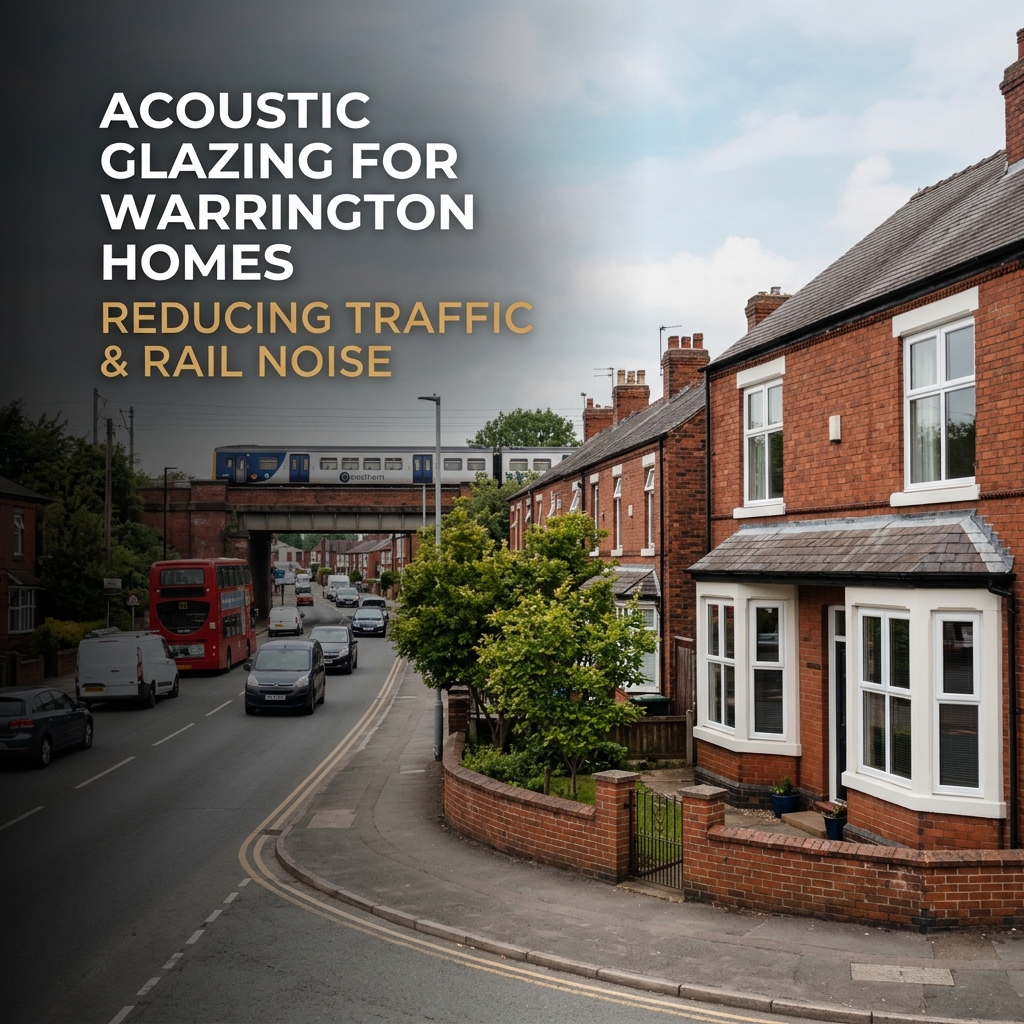
Acoustic Glazing for Warrington Homes: Reducing Traffic & Rail Noise
Warrington is a vibrant, thriving place to live, boasting exceptional transport links across Cheshire and the wider North West. However, living close to busy arteries like the M6, M62, A57 Winwick Road, or along the West Coast Main Line train corridor often comes with a significant downside: relentless background noise. If your peaceful evenings in Stockton Heath or morning sleep in Great Sankey are disrupted by roaring engines or squealing rail brakes, upgrading to high-performance acoustic glazing in Warrington could be the most impactful home improvement you ever make.
While standard double glazing offers decent thermal efficiency, it is frequently inadequate when it comes to blocking heavy, low-frequency sound waves. That is where specialist acoustic glass steps in. In this comprehensive guide, we will explore how soundproof glazing works, compare options for different types of noise pollution, outline expected installation costs for 2026, and explain why choosing an experienced local installer is crucial to achieving real peace and quiet.
Understanding Noise Pollution in Warrington: Why Standard Windows Fall Short
To understand why acoustic glazing is necessary, it helps to understand how sound travels through standard windows. Sound is essentially acoustic energy moving in waves through the air. When these waves hit a window pane, they cause the glass to vibrate. That vibration transfers sound energy through the air gap inside the unit and vibrates the inner pane, releasing sound straight into your living space.
Most modern UK homes are fitted with standard 4-16-4 double glazing (two 4mm glass panes separated by a 16mm argon gas cavity). While this design is brilliant for trapping heat, standard double glazing has a natural acoustic flaw: both panes of glass are the exact same thickness. Because they share the same mass and resonant frequency, sound waves pass through them with relative ease. Low-frequency noises—such as heavy goods vehicles grinding along the M66/M6 corridor or freight trains rumbling past Birchwood—cause both panes to vibrate in harmony.
If you live near major thoroughfares in Appleton, Lymm, or near Warrington town centre, standard double glazing usually yields a sound reduction index (Rw) of around 28 to 32 decibels (dB). While this cuts out general background chatter, it does little to mute the intrusive, low-pitch drone of commuter traffic or rail networks. Specialist soundproof windows in Cheshire homes, by contrast, are engineered specifically to break up these acoustic vibrations before they enter your home.
How Acoustic Glazing Works: The Science of Silence
Acoustic glazing does not rely on magic; it relies on physics. By manipulating glass thickness, pane construction, and internal gas gaps, manufacturers can disrupt sound waves far more effectively than standard window units. Here are the three primary scientific principles behind sound-reducing glass:
1. Acoustic Laminated Glass (The PVB Interlayer)
The single most effective weapon against noise pollution is acoustic laminated glass. This consists of two sheets of glass bonded together around a specialized, micro-thin interlayer of Polyvinyl Butyral (PVB). This clear acoustic membrane acts as a shock absorber. When sound waves hit the outer pane, the dampening interlayer absorbs the acoustic energy and prevents vibrations from transferring straight through to the inner sheet. Beyond sound insulation, laminated glass provides exceptional home security and blocks UV radiation.
2. Asymmetrical Glass Thickness
Rather than using two 4mm panes, acoustic double-glazed units utilize panes of varying thickness—for instance, a 6.8mm outer acoustic laminated pane paired with a 4mm inner float pane. Because the two panes have different masses, they resonate at completely different frequencies. Sound waves that successfully penetrate the first pane are largely reflected or dampened when they encounter the second pane because it vibrates at a different rate.
3. Optimised Cavity Widths & Gas Fills
The distance between the two panes plays a critical role in sound suppression. While thermal efficiency peaks at around a 16mm gap, wider cavity gaps (up to 20mm or more) can further improve sound reduction against certain low-frequency sound profiles. Filling this cavity with inert argon or krypton gas not only boosts energy efficiency but also provides a denser medium for sound waves to traverse compared to standard dry air.
When combined correctly, high-spec acoustic glazing can achieve sound reduction levels of 39dB to 45dB+. In real-world terms, a 10dB reduction represents a 50% perceived drop in noise volume to the human ear. Upgrading from standard double glazing (30dB) to high-spec acoustic glazing (40dB) makes traffic sound half as loud, transforming a noisy room into a tranquil retreat.
Tailoring Soundproof Windows to Your Warrington Location
Different areas across Warrington suffer from distinct acoustic challenges. The type of soundproof glazing you choose should match the primary noise source affecting your property.
Managing Traffic Noise (M6, M56, M62 & Local A-Roads)
Properties situated near major highways or busy local arterial routes—such as Winwick Road, Manchester Road, or the roads feeding off Junction 10 in Appleton—are subjected to continuous, mid-to-low frequency noise. Vehicle tyres on asphalt, diesel engines, and exhaust systems create a constant sonic hum.
For traffic noise, an asymmetric double-glazed acoustic unit featuring a 6.8mm acoustic laminated outer glass, a 16mm argon cavity, and a 4mm or 6mm inner glass pane is generally recommended. This configuration strikes the perfect balance between thermal performance and target noise cancellation, effectively muting constant road hum.
Combatting Rail Noise (West Coast Main Line & Local Routes)
Rail noise presents a different challenge altogether. Properties in areas like Great Sankey, Penketh, and Birchwood situated near rail lines experience intermittent, high-intensity noise events. Passing passenger trains generate high-frequency wheel-on-rail screeching, while heavy freight trains emit deep, ground-shaking low-frequency rumbles.
To tackle rail noise effectively, windows require maximum glass mass and enhanced acoustic dampening. Installing a 8.8mm acoustic laminated pane paired with a 6mm toughened inner pane offers superior performance against heavy vibration and screeching acoustics. In extreme cases, secondary glazing with a large air gap (100mm–150mm) fitted inside existing windows can provide unmatched acoustic isolation from train lines.
Cost of Acoustic Glazing in Warrington: 2026 Price Guide
Upgrading to soundproof windows is an investment in your health, sleep quality, and property value. Acoustic units cost more than basic uPVC double glazing due to the specialized manufacturing process of acoustic laminated glass and heavier frame requirements.
Below is an estimated cost guide for replacing standard windows with high-performance acoustic double glazing in Warrington properties in 2026 (inclusive of supply and professional fitting):
- Small Single Window (e.g., Bathroom / Small Bedroom): £650 – £950
- Medium Casement Window (e.g., Standard Bedroom / Living Room): £850 – £1,300
- Large Bay Window (3 to 5 panels): £1,800 – £3,200
- Acoustic Sliding Patio or French Doors: £2,200 – £4,000
- Full 3-Bedroom Semi-Detached House Upgrade (8-10 windows): £7,500 – £12,500
Exact pricing depends on frame material choices (uPVC, low-profile Aluminium, or Traditional Timber), decorative glass finishes, hardware selections, and ease of structural access. If your project involves wider structural alterations—such as replacing rotten timber sub-frames or enlarging openings—you may also need to consult a local builder in Warrington to prepare the brickwork before window installation begins.
The Importance of Fit: Frames, Acoustic Vents, and Air-Tight Seals
Even the most expensive acoustic glass will fail to reduce noise if the surrounding installation is flawed. Sound behaves like water—it will find and travel through the smallest available gap. A 1mm gap around a window frame can reduce its overall sound-insulation performance by as much as 50%!
To ensure your investment yields true peace and quiet, pay close attention to these vital installation factors:
1. Acoustic Trickle Vents
Under UK Building Regulations (Part F), modern replacement windows must provide adequate background ventilation to prevent damp and condensation. Traditional trickle vents are essentially open slots cut into the frame—allowing sound to bypass your acoustic glass effortlessly. Always insist on acoustic trickle vents. These specialized vents feature internal sound-baffling foams that allow air to circulate while deadening outside sound waves.
2. Frame Selection and Rigidity
Acoustic glass is considerably heavier than standard glass. A 6.8mm laminated unit weighs roughly 70% more than a standard 4mm pane. Frames must be structurally robust and reinforced with steel to prevent warping or sagging over time. Multi-chambered uPVC frames, heavy-duty aluminium profiles, or solid hardwoods are all excellent choices. If you live in a period home or conservation area in Lymm or Stockton Heath, you might prefer timber sash frames; in such cases, hiring a qualified carpenter in Warrington guarantees that traditional timber casings are properly weighted and sealed to handle heavy acoustic units.
3. Perimeter Sealing
Professional installation requires thorough expanded foam insulation and high-grade acoustic silicone sealants around the perimeter gap between the frame and the brickwork reveal. If the surrounding wall plaster is damaged during removal of old frames, ensure you hire a skilled plasterer in Warrington to make good the internal reveals, creating a dense, seamless sound barrier right up to the frame edge.
Secondary Glazing: A Smart Alternative for Period Homes
If you live in a listed building or a designated conservation area within Cheshire, replacing existing original single-glazed timber sash windows with thick double glazing might not be permitted by local planning authorities. In these circumstances, acoustic secondary glazing is an outstanding alternative.
Secondary glazing involves installing an independent, discreet slimline aluminum frame on the interior side of your existing primary window. Because secondary glazing allows for a substantial air cavity (often 100mm to 150mm) between the original window and the new inner glass, it creates an exceptionally effective sound-dampening chamber. In fact, a quality secondary glazing unit fitted with 6.4mm acoustic glass can outperform even brand-new acoustic double glazing for blocking low-frequency train rumble and traffic roar, all while preserving your home’s historic character.
Frequently Asked Questions About Acoustic Glazing in Warrington
Will acoustic glazing completely eliminate all outside noise?
No window system can promise 100% sound elimination, as sound can also transmit through solid brick walls, sub-floor voids, roof spaces, and doors. However, high-specification acoustic glazing can reduce incoming airborne noise by up to 80-90% (a 40-45dB drop). It transforms harsh, intrusive traffic or train noise into an barely audible, distant background hum.
Is acoustic triple glazing better than acoustic double glazing?
Surprisingly, not always! Adding a third pane of glass creates two small cavities within a standard frame width. If all three panes are the same thickness, internal resonances can actually make acoustic performance worse at certain frequencies compared to asymmetric double glazing. A dedicated asymmetric double-glazed unit with a thick acoustic laminated outer pane (e.g., 6.8mm acoustic + 16mm argon + 4mm float) usually outperforms standard triple glazing for noise suppression, while maintaining great thermal performance.
Can I retro-fit acoustic glass into my current window frames?
In some cases, yes—provided your existing uPVC or timber frames are in excellent condition, structurally sound, and deep enough to accommodate a thicker sealed unit. However, because acoustic glass is significantly heavier and often thicker than standard double-glazed units, older hinges and frame channels may not support the weight. A professional inspection by a local glazing specialist will determine whether re-glazing your current frames is feasible.
Do I need planning permission for acoustic windows in Warrington?
For standard residential properties outside conservation areas, replacing old windows with acoustic double glazing falls under Permitted Development rights, provided the overall appearance remains similar. However, if your home is listed or located in a protected area (such as parts of Lymm or Stockton Heath), strict guidelines apply. Secondary glazing is often preferred in these situations as it causes no external structural changes.
Transform Your Living Space with Verified Local Window Specialists
Excessive noise pollution isn't just an inconvenience—it impacts your sleep quality, increases stress levels, and reduces your overall quality of life. Upgrading to specialized soundproof windows is one of the most effective investments you can make to create a quiet, comfortable sanctuary in your Cheshire home.
Because acoustic performance relies heavily on precise measuring, correct unit specification, and airtight fitting, DIY or sub-par installation will severely compromise your results. Always choose an experienced, fully insured local specialist. Ready to reclaim peace and quiet in your home? Connect with a rated, trusted window installer in Warrington through our directory to get free, no-obligation quotes for your acoustic glazing project today.
Enjoyed this article?
Need a Verified Tradesperson in Warrington?
Browse verified local professionals across Warrington & Cheshire. Compare reviews, check qualifications, and get free quotes.